Gambling Addiction Warning Signs and How to Help

Introduction: Helping Someone You Care About With Gambling Addiction
Gambling addiction often hides in plain sight. Losses can be disguised as “bad luck,” time spent gambling as “downtime,” and stress as “work problems.” Many people who struggle also become experts at minimizing, borrowing, and promising it will stop. That’s why support matters: not to police them, but to break the isolation and push the problem into the open—safely, firmly, and with a plan. This introduction is part of Signs of Gambling Addiction: Warning Signs and Where to Get Help.
This guide covers what to look for, what to say (and what not to say), how to set boundaries that protect you, and which help options actually work. It also explains why chasing losses can intensify fast—especially when odds and access differ by platform (see Online vs Land-Based Casino Odds: What Changes?).
- Warning signs: money secrecy, mood swings, missed responsibilities, borrowing, “one more bet” thinking.
- What to say: calm, specific observations; one clear ask; one next step.
- What not to do: argue about promises, cover debts, or threaten without follow-through.
- Boundaries: limits on money, access, and support—written if needed.
- Help options: self-exclusion, counseling, peer support, financial safeguards.
Safety note: If there’s talk of self-harm, violence, severe intoxication, or immediate financial crisis (e.g., illegal loans), treat it as urgent. Call local emergency services or a crisis line right away. Don’t handle imminent risk alone.
Signs of Gambling Addiction: Warning Signs to Look For

Behavioral warning signs
- Preoccupation: thinking about betting, planning the next wager, or replaying wins/losses.
- Chasing losses: increasing stakes or gambling longer to “get even.”
- Loss of control: repeated failed attempts to cut back, “just one more bet,” broken limits.
- Secrecy: hiding receipts, deleting app history, lying about time or money spent.
- Withdrawal-like irritability: restlessness, anger, or anxiety when unable to gamble.
Financial warning signs
- Unpaid bills, late fees, bounced payments, utilities at risk.
- Borrowing or begging from friends/family; taking cash advances.
- Secret accounts, new credit cards, missing bank transfers, unexplained cash withdrawals.
- High-risk debt: payday loans, “no credit check” lenders, or selling personal items to fund bets.
- Missing money at home or work; “loan” stories that don’t add up.
Relationship, work, and school impacts
- Absences, lateness, skipped responsibilities, falling grades.
- Lying and conflict around money, time, and trust; defensiveness when asked.
- Declining performance, warnings at work, isolation from friends and family.
Digital and app-based clues
- Sports betting apps used throughout the day; constant odds-checking.
- Crypto casinos, offshore sites, or multiple betting accounts to bypass limits.
- Frequent deposits/withdrawals, “micro” transactions, repeated top-ups after losses.
Co-occurring risks and urgent red flags
- Anxiety, depression, or substance use increasing alongside gambling.
- Self-harm warning signs: hopelessness, talking about death, giving away possessions, saying others would be “better off.” If present, treat it as urgent and contact local emergency services or a crisis line.
How to Start the Conversation: What to Say (Scripts That Help)

Choose the right moment
Pick a calm, private time—never during an argument, at the casino, or right after a loss. Aim for a neutral setting (walk, car ride, quiet room). If there are urgent red flags (talk of self-harm, hopelessness), pause the gambling talk and contact emergency services or a crisis line.
Use supportive language (observations + impact + concern)
- Observation: Stick to facts you’ve seen (missed bills, secrecy, repeated top-ups).
- Impact: Name the real-world effect on money, trust, mood, sleep, work.
- Concern: Lead with care, not blame. Avoid “You’re irresponsible.”
Scripts that help
- Partner: “I’ve noticed more late-night betting and a few cash advances. I’m scared about our finances and about you. Can we look at what’s been going on—and get support together?”
- Parent to teen: “I saw gambling purchases and repeated top-ups. I’m not here to punish you—I’m worried. What do you like about it, and what’s the downside showing up?”
- Friend: “You’ve seemed stressed and you keep chasing losses. I care about you. Would you be open to talking to someone this week? I can sit with you while you call.”
- Coworker/manager: “I’ve noticed increased absences and distraction. I’m concerned about your wellbeing. What support do you need right now, and should we connect you with our employee resources?”
Motivational approach basics
- Open questions: “What happens right before you gamble?” “What would you want to be different?”
- Affirm: “It took guts to talk.”
- Reflect: “Part of you wants the rush—and part is tired of the fallout.”
If they deny it
Stay calm. Don’t litigate details. Try: “I hear you. I’m still worried. If you ever want help, I’m here.” Set a clear boundary and follow through—similar to healthy communication frameworks like consent and boundaries conversations.
Optional: If gambling comes up, avoid debating odds—if they ask, point them to how outcomes work, like how Slot RTP is calculated.
What Not to Do: Common Mistakes That Can Make Gambling Problems Worse

Avoid shaming, blaming, labeling, or moralizing
Shame drives secrecy. Don’t call them “weak,” “selfish,” or “an addict” in anger. Don’t turn it into a character trial. Stick to observable facts and impact: what you saw, how it affects money, trust, and safety. Keep your tone calm. Don’t litigate details. Try: “I hear you. I’m still worried. If you ever want help, I’m here.” Set a clear boundary and follow through—like consent-and-boundaries conversations.
Don’t lecture with stats or argue about “logic” after losses
After a loss, their brain is often in chase mode. Debating probability rarely lands. Avoid “You can’t win long term” speeches in the moment. If they ask, keep it simple and redirect: outcomes are designed to favor the house (for example, how Slot RTP is calculated). Then return to the real issue: harm, limits, and getting support.
Don’t enable: no debt-covering, “one last loan,” or rescuing
- Don’t pay off debts to “make it go away.” It often buys another cycle.
- Don’t lend money, co-sign, or hand over credit cards “just this once.”
- Don’t lie to employers, family, or friends to protect them from consequences.
- Don’t clean up the fallout every time. Natural consequences can motivate change.
If money is the trigger, point them toward structured limits, not bailouts—see Per-Bet Rules for Casino Table Games: Step 3 Budgeting.
Avoid controlling tactics (surveillance, threats, hollow ultimatums)
Tracking their phone, interrogating receipts, or “catching” them turns you into police—not support. Ultimatums without follow-through teach them you don’t mean it. Choose boundaries you can keep (separate finances, no loans, no gambling in the home) and act consistently.
Don’t make yourself their therapist—know your role and limits
You can support, not treat. Encourage professional help and peer support, and protect your own wellbeing. For next steps and options, link them (or yourself) to Signs of Gambling Addiction: Warning Signs & Help Options. If you’re depleted, get your own support.
Setting Boundaries That Protect You (and Support Recovery)
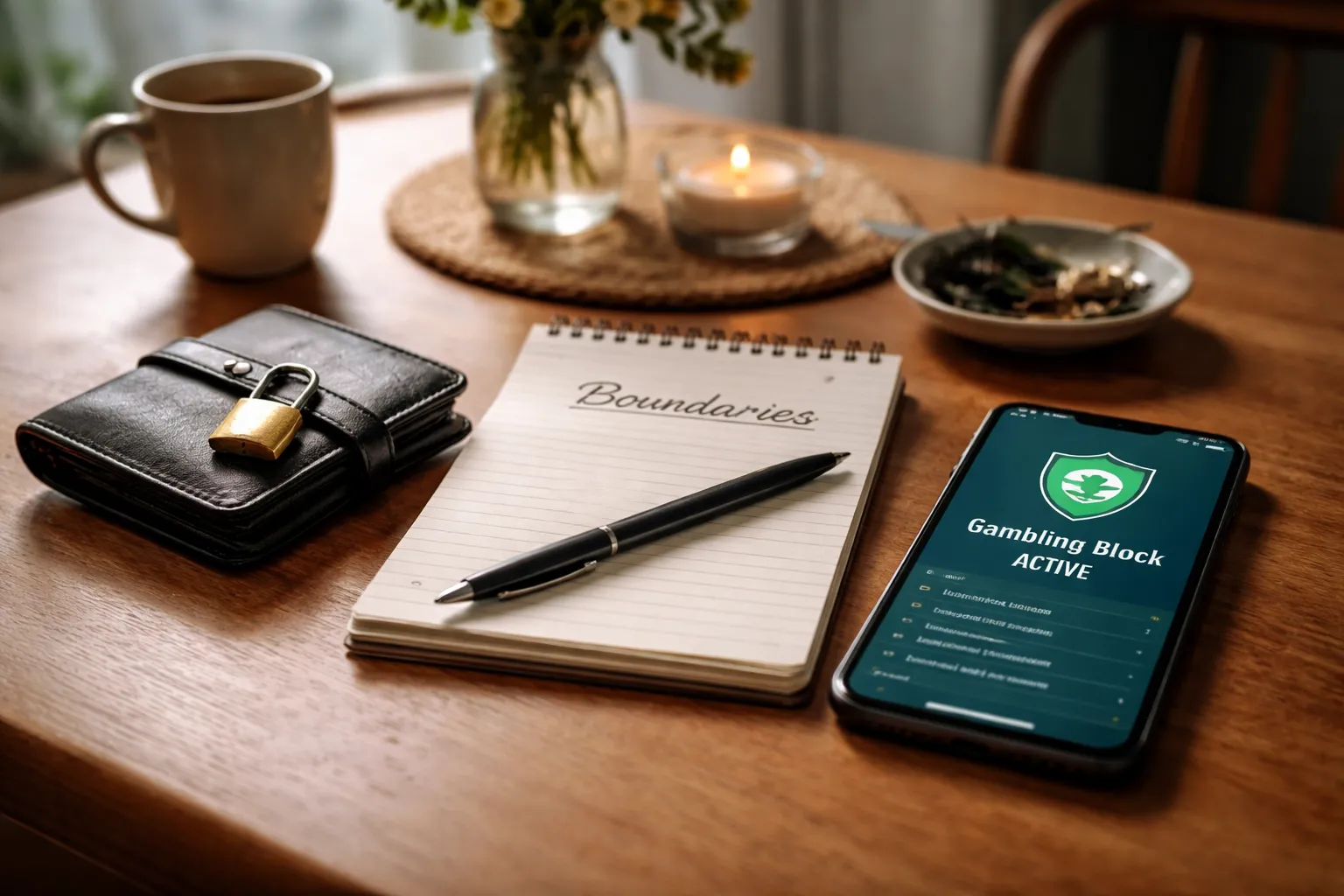
What boundaries are (and aren’t)
Boundaries are clear, specific rules you control and can enforce. They protect you and make recovery easier. They aren’t threats, punishments, or attempts to “manage” someone’s addiction. If you can’t enforce it, don’t set it.
Financial boundaries
- No loans, no bailouts, no “one last time” money.
- Separate accounts and change direct deposits.
- Credit freezes and new card numbers; remove saved payment methods.
- Spending limits: prepaid card/cash-only for agreed essentials.
- Transparency: shared budget, receipts for household spending, weekly check-ins.
If they argue about “fairness,” point to reality: the risk is higher than the odds. (See Online vs In-Person Casino Odds: RNGs & Fair Play.)
Home and relationship boundaries
- No gambling in the home; no “free-play” loopholes.
- Honesty expectations: lying ends the conversation and triggers consequences.
- Device/app rules: block sites, remove apps, enable parental controls, shared access if agreed.
- Recovery actions: attendance at therapy/support meetings as a condition for rebuilding trust.
Emotional boundaries
- If they become abusive, end the conversation and leave/ask them to leave.
- Don’t negotiate during crises (panic, withdrawal, rage). Pause and revisit later.
- You can support, not treat. Don’t be their therapist.
How to communicate boundaries + consequences
- “I won’t give you money for any reason. If you ask, I’ll end the call.”
- “If you gamble again, you will sleep elsewhere and we’ll reassess in 30 days.”
- “If you lie about gambling, I will separate finances immediately.”
State it once. Follow through every time.
Protecting children and dependents
- Stability first: rent, food, utilities paid before anything else.
- Age-appropriate transparency: “Money is tight; adults are handling it.”
- Safety planning: backup childcare, emergency contacts, and a place to go if conflict escalates.
Where to Get Help: Treatment, Support Options, and Practical Next Steps

Where to Get Help: Treatment, Support Options, and Practical Next Steps
Start with one action today. If money is at risk, separate finances, freeze access to shared funds, and put essentials first: rent, food, utilities. Then move fast to support. A GP or primary care doctor can screen for gambling disorder and refer to therapy. Look for evidence-based options like CBT, motivational interviewing, and financial counseling. Peer support helps many people stay accountable—try local or online meetings (e.g., Gamblers Anonymous) and consider support groups for partners and family.
If there’s conflict at home, plan for safety: backup childcare, emergency contacts, and a place to cool off if things escalate. Keep kids out of the details; use simple truth: “Money is tight; adults are handling it.” Document accounts, debts, and triggers, and set one clear boundary—state it once and follow through every time.
- Today: lock down finances; cancel saved cards; self-exclude where possible.
- This week: book a clinical assessment; join one support meeting.
- This month: set a repayment plan and relapse-prevention routine.
Read our detailed guide: Signs of Gambling Addiction: Warning Signs & Help Options
Key Takeaways
Key Takeaways
- In het kort: Spot early red flags: chasing losses, secrecy, irritability when not betting, lying, borrowing, missed work/school, and rising debts.
- Use supportive, non-shaming language. Talk about impact (“I’m worried about the bills and your stress”) instead of blame.
- Avoid enabling. Don’t cover losses, lend “one last” loan, or hand over access to cash. Boundaries help when they’re clear and consistent.
- Get outside help fast: clinical assessment, evidence-based treatment, and peer support (e.g., GA or family groups). Add financial safeguards: cancel saved cards, block gambling merchants, and self-exclude where available.
- Make the plan simple: today secure money access; this week book an assessment and attend one meeting; this month set a repayment plan and relapse-prevention routine.
- Your safety matters too. If there’s intimidation, coercion, or abuse, prioritize your wellbeing, protect finances, and seek professional support.
- Healthy boundaries are normal in any high-stakes situation—see practical guidance on agreements and consent in Safer Sex Agreements: Boundaries, Consent & Swinging Talk.
FAQ
How do I know if it’s a gambling addiction or just a bad habit?
If they can’t stop, chase losses, hide play, borrow/steal, neglect work/relationships, or gamble despite harm, it’s likely addiction. “Just a habit” responds to limits. “Addiction” escalates and triggers withdrawal-like agitation when blocked.
What should I do if they refuse help or deny there’s a problem?
Don’t argue facts. Name specific impacts, set clear limits, and follow through. Offer one next step (screening, therapist, Gamblers Anonymous). If safety is at risk, prioritize protection, separation, and professional support.
Should I pay off their gambling debt to stop the crisis?
Usually no. Paying can remove consequences and fund relapse. Instead: freeze access, separate accounts, contact creditors about hardship plans, and insist on treatment and a written budget. Consider a financial counselor or debt advisor.
How can I set boundaries without “abandoning” them?
Boundaries are support with structure: “I won’t lend money,” “I’ll attend counseling,” “I’ll live separately if gambling continues.” Keep language calm, specific, and enforceable. Your wellbeing matters; coercion or abuse changes the plan.
What if my spouse/partner is gambling online in secret?
Secure finances first: separate accounts, new passwords, credit freezes, transaction alerts. Ask for full transparency: statements, app access, self-exclusion, blocking software. If they refuse, treat it as ongoing risk, not a misunderstanding.
How do I talk to a teen or young adult about sports betting?
Be blunt: odds are engineered; “wins” are marketing. Discuss dopamine, influencers, and easy-credit traps. Set household rules on apps and payments. If they’re curious, redirect to safer learning about chance, like how RTP works.
Can someone recover without going to rehab?
Yes. Many recover with outpatient therapy, GA, medication for co-occurring issues, self-exclusion, and strong money controls. Rehab is helpful when there’s severe debt, suicidality, substance use, or repeated failed attempts.
What are the signs of relapse, and how should I respond?
Secrecy, “just one bet,” new accounts, cash withdrawals, irritability, chasing losses, or contact with betting buddies. Respond fast: tighten financial controls, re-start meetings/therapy, review triggers, and update the relapse-prevention routine.
When should I involve family, an employer, or legal/financial professionals?
When bills go unpaid, assets are threatened, fraud occurs, or safety is compromised. Use a lawyer for shared property, a credit counselor for debt, and an accountant for complex finances. Involve family when accountability and protection outweigh privacy.
What resources exist if I’m overwhelmed as a supporter?
Try Gam-Anon, therapist support, domestic-violence services if needed, and financial counseling. Use crisis lines if there’s self-harm talk. You’re allowed to step back. For unrelated reset time, plan recovery breaks like quiet travel.
Conclusion: Support With Compassion, Clarity, and Boundaries
Conclusion: Support With Compassion, Clarity, and Boundaries
Gambling addiction is isolating. Support can be life-changing. But you can’t control their choices. You can offer steadiness, name what you see, and protect yourself from being pulled into chaos.
Keep your approach simple: compassion for the person, clarity about the problem, and boundaries around money, lying, and safety. Don’t argue about odds or “one last win.” Focus on impact: broken trust, missing rent, spiraling debt, emotional volatility. Repeat your line calmly. Follow through.
- Support: encourage treatment, meetings, and accountability that doesn’t rely on you as the bank or the detective.
- Clarity: speak in facts and timelines (“This happened. This is what I need next.”).
- Boundaries: separate finances, limit access, and pause contact if manipulation or threats show up.
If you’re overwhelmed, get backup. Gam-Anon, a therapist, financial counseling, and—if there’s intimidation or coercion—domestic-violence services are valid options. If there’s talk of self-harm, treat it as urgent and use local crisis lines or emergency services.
One next step today: choose one action—start a direct conversation, set a single boundary in writing, or contact a support resource for yourself.
Use clear scripts when emotions spike; practical communication tools can help you stay steady under pressure. See ENM Communication Terms: Consent, Check-Ins & Conflict and Swinging Etiquette & Safety: Rules, Boundaries & Scripts for boundary language you can adapt.
Final tip: schedule a small recovery break this week—quiet time, a walk, or a short trip plan—so your nervous system can reset. If you want structure, use Reisgids met vroegboekkorting: Waar en hoe te boeken.
-
Online vs Land-Based Casino Odds: Rules & House Edge
1 month ago -
Casino Betting Systems: Myths, Hot Streaks & “Due” Numbers
1 month ago -
Online vs In-Person Casino Odds: RNGs & Fair Play
1 month ago -
Casino Security, Fairness & Regulation Explained
1 month ago -
Signs of Gambling Addiction: Warning Signs & Help Options
1 month ago
-
- How do I know if it’s a gambling addiction or just a bad habit?
- What should I do if they refuse help or deny there’s a problem?
- Should I pay off their gambling debt to stop the crisis?
- How can I set boundaries without “abandoning” them?
- What if my spouse/partner is gambling online in secret?
- How do I talk to a teen or young adult about sports betting?
- Can someone recover without going to rehab?
- What are the signs of relapse, and how should I respond?
- When should I involve family, an employer, or legal/financial professionals?
- What resources exist if I’m overwhelmed as a supporter?
-
- How do I know if it’s a gambling addiction or just a bad habit?
- What should I do if they refuse help or deny there’s a problem?
- Should I pay off their gambling debt to stop the crisis?
- How can I set boundaries without “abandoning” them?
- What if my spouse/partner is gambling online in secret?
- How do I talk to a teen or young adult about sports betting?
- Can someone recover without going to rehab?
- What are the signs of relapse, and how should I respond?
- When should I involve family, an employer, or legal/financial professionals?
- What resources exist if I’m overwhelmed as a supporter?
-
Signs of Gambling Addiction: Warning Signs & Help Options
1 month ago -
Casino Betting Systems: Myths, Hot Streaks & “Due” Numbers
1 month ago -
Casino Systems Myth: Can You Really Gain an Edge?
1 month ago -
Online vs In-Person Casino Odds: RNGs & Fair Play
1 month ago -
Online vs Land-Based Casino Odds: Rules & House Edge
1 month ago
-
Online vs Land-Based Casino Odds: Rules & House Edge
1 month ago -
Casino Betting Systems: Myths, Hot Streaks & “Due” Numbers
1 month ago -
Online vs In-Person Casino Odds: RNGs & Fair Play
1 month ago -
RTP Explained: How to Use Return to Player to Choose Slots
1 month ago -
Casino Security, Fairness & Regulation Explained
1 month ago