Online vs Land-Based Casino Odds: Rules & House Edge

Casino odds aren’t a vibe. They’re math—rules plus house edge. Yet players still assume online games are “tighter” or that land-based floors are “fairer.” The truth: the edge usually comes from the same place in both settings—how the game is written, dealt, and paid. What changes is the delivery: software RNG vs physical equipment, speed of play, rule variants, and how consistently those rules are enforced.
This chapter breaks down where online and land-based odds actually diverge, why small rule tweaks move the needle, and how to spot the real cost of a “better” table. If you want the full comparison first, jump back to Online vs Land-Based Casino Odds: What Changes?.
- Rules decide the baseline edge (blackjack, roulette, baccarat, slots).
- Paytables can quietly raise or lower expected losses.
- Game pace changes how fast the edge is paid—not the edge itself.
Side note: if you’re researching “odds” in other decision-heavy arenas, these reads may help—Attachment, Jealousy & NRE in Open Relationships, Swinging Etiquette 101: Rules, Boundaries & Agreements, Hotel Vroegboekkorting voor Luxe Accommodaties, and Invloed van Vroegboekkorting op Prijs: Wat u Moet Weten.
How Casino Game Odds Work: House Edge, Probability, and Payouts
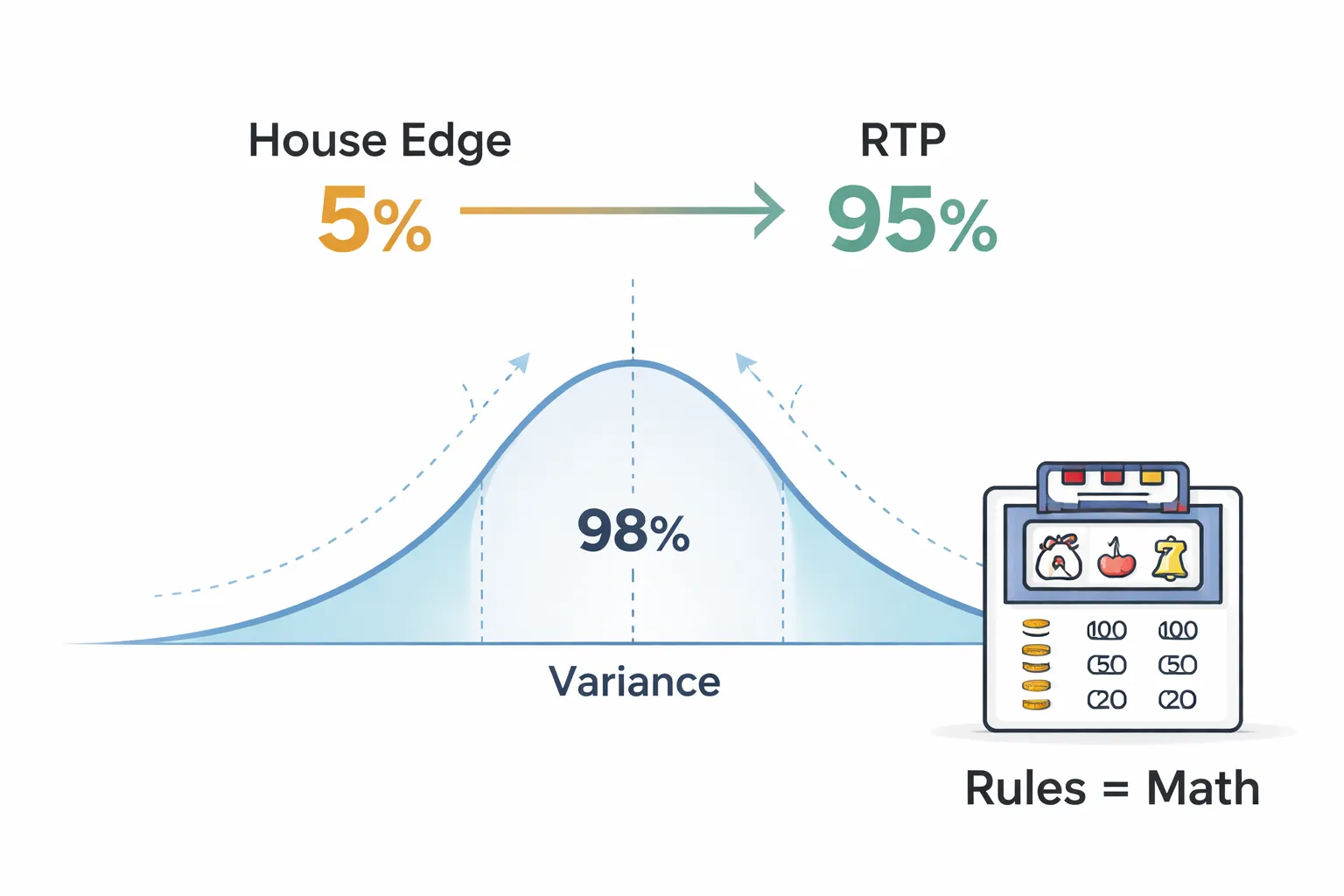
House Edge vs RTP: What Each Number Means (and Doesn’t)
House edge is the casino’s long-run advantage, expressed as a percentage of every dollar wagered. A 2% house edge means $2 per $100 bet is expected to stay with the house over time. RTP (return to player) is the mirror image: 98% RTP equals a 2% house edge.
What these numbers do tell you: the average cost of playing a game, assuming you follow the rules that produce the stated edge (like correct blackjack strategy). What they don’t tell you: how likely you are to win tonight, how big a swing you’ll face, or how “fair” the game feels in a short session.
Probability and Variance: Why Short-Term Results Mislead
Probability describes the chance of outcomes on a single bet. Variance describes how wildly results can swing around the average. High-variance games (many slots, some side bets) can pay rarely but in chunks; low-variance games (some video poker, banker bets in baccarat) tend to swing less.
This is why someone can beat a 5% house edge for hours—or lose fast in a 0.5% edge game. The edge is statistical; variance is emotional. More spins/hands don’t “change” the odds; they simply make your results drift closer to the expected average.
Payout Tables Are the Rules: Where the Math Is Set
The real odds live in the payout table. Change payouts, and you change the house edge—even if the game looks identical. Example: two video poker machines can use the same cards and hand rankings, yet have different RTP because the full house or flush payout is lower.
Before you chase “better odds,” check the paytable first. If you like comparisons in other deal-driven spaces, see Cruise vakanties met vroegboekkorting: Waar vind je de deals? or Invloed van Vroegboekkorting op Prijs: Wat u Moet Weten. For reward structures, compare Camgirls Belohnungen: Vorteil für Treue Fans and Camgirls Chatten: Direktes Gespräch.
Online vs Land-Based Odds: What’s Actually Different (and What Isn’t)

Same game, different rules: the label matters less than the paytable
“Online” and “land-based” don’t guarantee better or worse odds. The paytable and rules do. A casino can offer generous rules on-site and tighter ones online—or the reverse. The same name on the lobby sign means nothing if the settings differ.
- Blackjack: 3:2 vs 6:5 payouts, dealer hits/stands on soft 17, surrender allowed.
- Roulette: European (single-zero) vs American (double-zero).
- Video poker: “Full-pay” vs reduced-pay schedules change return fast.
Before you chase “better odds,” read the paytable like you’d read deal terms when booking early—see must-know wenken voor succesvol boeken met vroegboekkorting.
Return differences are driven by settings: limits, side bets, optional features
Many RTP gaps come from how the game is configured, not where it’s played.
- Bet limits: Lower minimums can encourage longer sessions; higher limits can magnify variance and losses.
- Side bets: Often carry a higher house edge than the main bet.
- Optional features: “Bet behind,” auto-play, extra wagers, and bonus buys can change your effective risk profile.
Think “add-ons change the deal,” similar to travel extras—compare tips om een auto te huren met vroegboekkorting and vroegboekkorting voor stadsreizen.
Live dealer vs RNG vs physical dealing: what changes, what doesn’t
RNG online: outcomes come from certified random number generators. Live dealer: real cards/wheels streamed. Land-based: physical dealing on-site.
What stays constant: the math. If rules and paytables match, the house edge is essentially the same—only speed, pacing, and perception differ. For a “digital but direct” comparison, see Camgirls Stream: Digital und Direkt.
RNGs, Shuffling, and Dealing: How Outcomes Are Generated

RNGs: Fairness, Testing, Independence
Most online casino games don’t “deal” physical cards. They generate outcomes with a random number generator (RNG). A certified RNG is designed to produce unpredictable results and to ensure each spin, card, or number draw is independent of the last.
To prove fairness, reputable operators submit the RNG and game logic to external testing. Labs check statistical randomness, verify that results can’t be nudged by the casino, and confirm that stated rules and paytables match what the software actually runs. If the same blackjack rules or roulette payouts are used, the house edge comes from the math, not from whether the outcome was “digital” or “physical.”
Shuffling, Dealing, and CSMs
In land-based blackjack, cards are shuffled by hand or by a continuous shuffle machine (CSM). Online live dealer tables use real cards on camera, often with frequent reshuffles or shoe changes.
CSMs and frequent reshuffles mainly hit card counting. They reduce your ability to track composition and exploit favorable decks. What they don’t do is magically change the game’s base house edge when rules stay the same.
Speed: Odds vs Expected Loss per Hour
Your “odds” (house edge) are per bet. But your expected loss per hour depends on pace: hands/spins per hour times average bet times house edge.
- Fast RNG slots and auto-play: more bets per hour, higher hourly swing.
- Live dealer: slower pacing, fewer decisions per hour.
- Busy land-based tables: slower still, with interruptions.
If you’re comparison-shopping for savings elsewhere, see Wat zijn de beste vroegboekkorting pakketreizen? or Vroegboekkorting Vliegbedrijfsdeals: Waar U Moet Kijken. For a “digital but direct” contrast, read Camgirls Amateur: Authentisch und Echt and Belastinginformatie voor Webcam Modellen.
Game Rules That Actually Change the Odds (By Game Type)

Blackjack: Rule Toggles That Move the House Edge
Dealer on soft 17: H17 (hits) is worse for players than S17 (stands). Many online tables publish this; land-based varies by pit.
Number of decks: Fewer decks generally helps the player (single/deck < double < six/eight) because blackjacks and doubles land slightly more often.
- Surrender: Late surrender lowers the edge; no surrender raises it.
- Double-after-split (DAS): Allowed = better odds; not allowed = higher edge.
- Re-splits: More re-splits (especially re-splitting Aces) usually improves EV; one-split-only hurts.
Don’t “feel” your way through rule changes—streaks don’t rewrite math. See Gambler’s Fallacy Explained: Streaks, Randomness, Odds.
Roulette: Zeros Decide Everything
Single-zero (European): lower house edge. Double-zero (American): higher. Triple-zero: highest of the three and increasingly common online.
- Special bets: Most “bonus,” “Lightning,” or “Jackpot” side bets have fixed, higher edges than standard inside/outside bets.
Baccarat: Commission and Variants
Banker commission: Standard 5% keeps edge relatively low; reduced/no-commission variants typically compensate with altered payouts (often worse long-term).
Video Poker: Pay Schedules Are the Game
The same title can swing from decent to brutal based on the pay table. Online lets you shop; land-based often locks schedules by venue.
Slots: RTP Configuration (Not the Theme)
Slots run on configurable RTP ranges. Online casinos may list RTP; land-based rarely does. Also note policy controls like Privacy, Compliance & Self-Exclusion: What to Know.
Vliegvakanties boeken met vroegboekkorting: Hoe werkt het? and Wanneer begint vroegboekkorting? Plan je vakantie slim.
How to Compare Odds in Practice (Quick Checklist)
1) Open the paytable/rules screen before you bet
- Blackjack: Check 3:2 vs 6:5, dealer hits/stands soft 17, double rules, surrender, re-split aces.
- Roulette: Confirm single-zero vs double-zero (or triple). The extra zero(s) raise the house edge.
- Baccarat: Verify commission/“no commission” rules and payout on Banker wins.
- Video poker: Identify the exact paytable (e.g., 9/6 Jacks or Better) and don’t assume by theme.
- Slots: Look for listed RTP; if it’s hidden, treat it as unknown and compare elsewhere.
2) Identify the edge-moving items (fast)
- Payout changes: 6:5 blackjack, reduced video poker payouts, “no commission” baccarat tweaks.
- Rule limits: No surrender, limited doubling, single-deck with restrictive doubles, etc.
- RTP configuration: Same slot can run on multiple RTP settings; don’t judge by branding.
3) Avoid rule traps
- Side bets: Usually higher house edge than the base game.
- Bonus wagers: “Must bet” add-ons and progressive qualifiers can be expensive.
- Bad variants: Double-zero roulette, 6:5 blackjack, weak video poker tables.
4) Use expected value thinking
Hourly cost ≈ house edge × average wager × hands/spins per hour. A small edge difference becomes big at higher speed (online) or bigger stakes.
5) Quick safety check
If you’re chasing losses or losing control, read Gambling Addiction Warning Signs and How to Help.
FAQ
Are online casino games “rigged,” or is it just RNG variance?
Usually it’s variance. Legit sites use audited RNGs, so streaks happen naturally. “Rigged” results are more often from high house edge, fast play speed, or shady operators. For edge mechanics, see How Game Rules and Player Choices Affect Casino Edge.
Do land-based casinos have better odds than online casinos?
Not consistently. Land-based can be worse (6:5 blackjack, triple-zero roulette). Online can be better (3:2 blackjack, single-zero roulette) but also offers many high-edge variants. Compare rules, not location. Unrelated deals logic: Waarom Vroegboekkorting Gebruiken? De Redenen.
What single rule change impacts blackjack odds the most?
Payout: 3:2 vs 6:5. Switching to 6:5 adds about +1.39% house edge on a natural, turning a decent game into a costly one. Other big shifts: dealer hits soft 17, limited doubling, fewer decks, and resplit rules.
-
Online vs In-Person Casino Odds: RNGs & Fair Play
7 months ago -
Casino Betting Systems: Myths, Hot Streaks & “Due” Numbers
7 months ago -
Casino Security, Fairness & Regulation Explained
7 months ago -
How Slot RTP Is Set: Design, Paytables & RNG
7 months ago -
Signs of Gambling Addiction: Warning Signs & Help Options
7 months ago
-
Signs of Gambling Addiction: Warning Signs & Help Options
7 months ago -
Casino Betting Systems: Myths, Hot Streaks & “Due” Numbers
7 months ago -
Casino Systems Myth: Can You Really Gain an Edge?
7 months ago -
Online vs In-Person Casino Odds: RNGs & Fair Play
7 months ago -
How Slot RTP Is Set: Design, Paytables & RNG
7 months ago
-
Online vs In-Person Casino Odds: RNGs & Fair Play
7 months ago -
Crypto Casinos Explained: Pros, Cons, and Volatility Risks
7 months ago -
Online Casino Security Tips: 2FA, Passwords, and Phishing Protection
7 months ago -
Casino Game Providers Explained: Who Makes the Games (and Why It Matters)
7 months ago -
Bitcoin Casino Deposits and Withdrawals Explained (How It Works)
7 months ago