How Slot RTP Is Set and Why It Varies by Casino

Introduction: RTP Explained and Why It Matters When Choosing Slots
RTP (Return to Player) is the long-run percentage a slot is designed to pay back across millions of spins. It’s not your personal “payback” today. It’s a mathematical target, tied to the game’s model, that shapes how much value you can expect per bet over time. If you’re comparing slots, RTP is one of the few numbers that helps you avoid guessing—so you can choose games with better theoretical value and understand why two casinos can offer the “same” slot with different returns.
Players usually call anything 96%+ “good RTP,” with 97%+ seen as strong. Lower RTP means the casino edge is higher. That doesn’t guarantee you’ll lose on a short session, but it does mean you’re swimming against a stronger current.
- How RTP is set: by the game developer’s math model (paytable, hit frequency, bonus design), then often offered in multiple RTP configurations.
- How RTP is calculated: as an expected return over an enormous sample size, not a promise of fairness in any single spin (see Casino RNG Testing & Certification: How Fairness Is Verified).
- Why RTP varies by casino: operators may select different RTP versions, apply jurisdiction rules, or segment by market.
This chapter expands on RTP Explained: How to Use Return to Player to Choose Slots, showing how the number is chosen, what it really measures, and why “good RTP” depends on where you play—not just what you play.
What Is Slot RTP (Return to Player) and What It Actually Measures
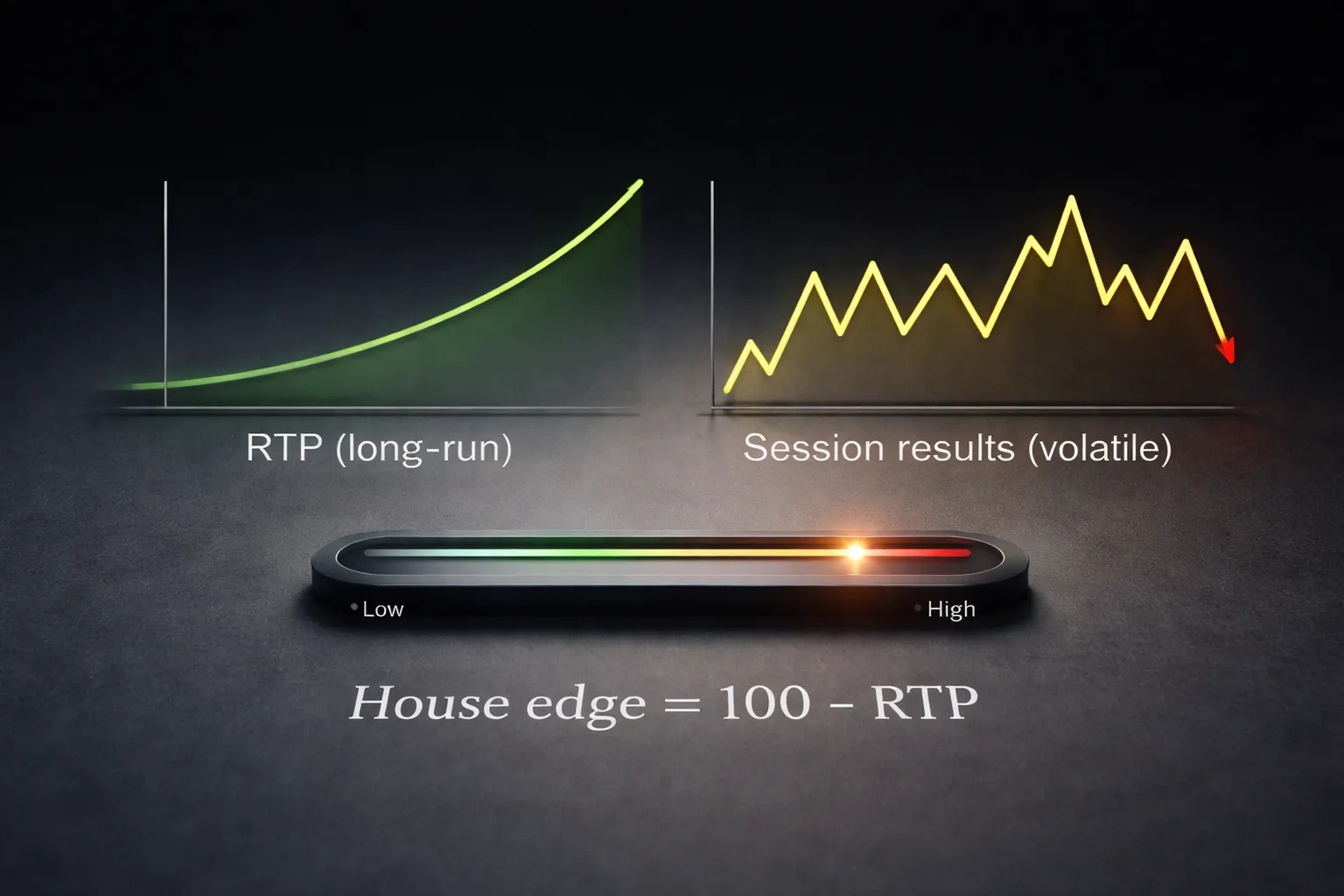
What RTP Means (and What It Doesn’t)
RTP (Return to Player) is the theoretical percentage of all wagers a slot is programmed to pay back over an extremely long run of spins. An RTP of 96% means that, across millions (often billions) of spins, the model aims to return about $96 for every $100 wagered.
RTP is not a promise for your next 50, 500, or even 5,000 spins. It’s a math target embedded in the game’s paytable and probability settings.
RTP vs Real Sessions: Variance and Sample Size
In a single session, results can swing far above or below the published RTP because of variance and small sample size. Short sessions are noisy: a few big wins (or long dry spells) can dominate your outcome. The RTP only “shows up” as spin counts become massive—far beyond what most players will ever reach.
RTP vs Hit Frequency and Volatility (Common Misconceptions)
High RTP doesn’t automatically mean “wins often,” and low RTP doesn’t always mean “no action.” Hit frequency is how often any win occurs; volatility is how win sizes are distributed (many small wins vs rare big ones). Two slots can share 96% RTP but feel totally different: one may drip small payouts, another may go quiet for long stretches and then spike.
RTP vs House Edge (Quick Conversion)
RTP and house edge are two sides of the same coin:
- House edge = 100% − RTP
- Example: 96% RTP implies a 4% house edge
Unrelated, but useful reads: Vind Goedkope Vliegtickets met Vroegboekkorting and Natuurreizen boeken met vroegboekkorting: De beste tips.
How Slot RTP Is Set: Game Design, Paytables, and RNG Probability Weighting
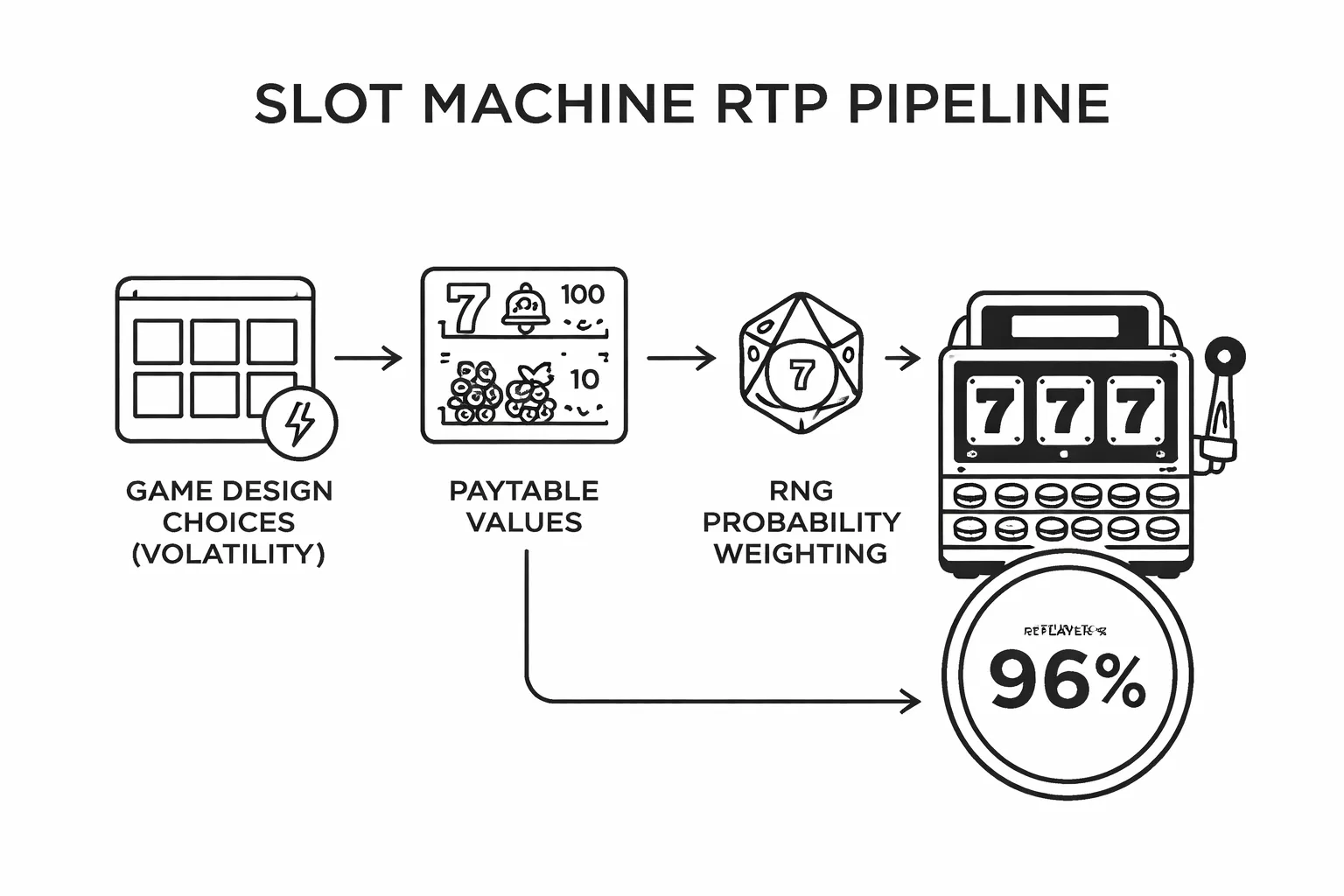
How Slot RTP Is Set: Game Design, Paytables, and RNG Probability Weighting
Slot RTP is engineered, not guessed. It starts in game design: the studio chooses volatility (how often wins happen and how large they are) and then builds a paytable that fits that “feel.” Next comes the math model. Each symbol, bonus trigger, and feature is assigned probabilities through the RNG’s outcome mapping (probability weighting). That weighting determines how frequently high-paying combinations appear versus low-paying “drip” wins. Change the paytable or change the weighting, and RTP shifts—even if the theme and reels look identical. This is also why two casinos can offer the “same” slot with different RTP versions: operators may select from approved RTP profiles (where regulations allow). For more on myths about “beating” these systems, see Casino Myth #4: Can You Beat the System?.
Read our detailed guide: How Slot RTP Is Set: Design, Paytables & RNG
How Slot RTP Is Calculated: The Math Behind the Published Percentage
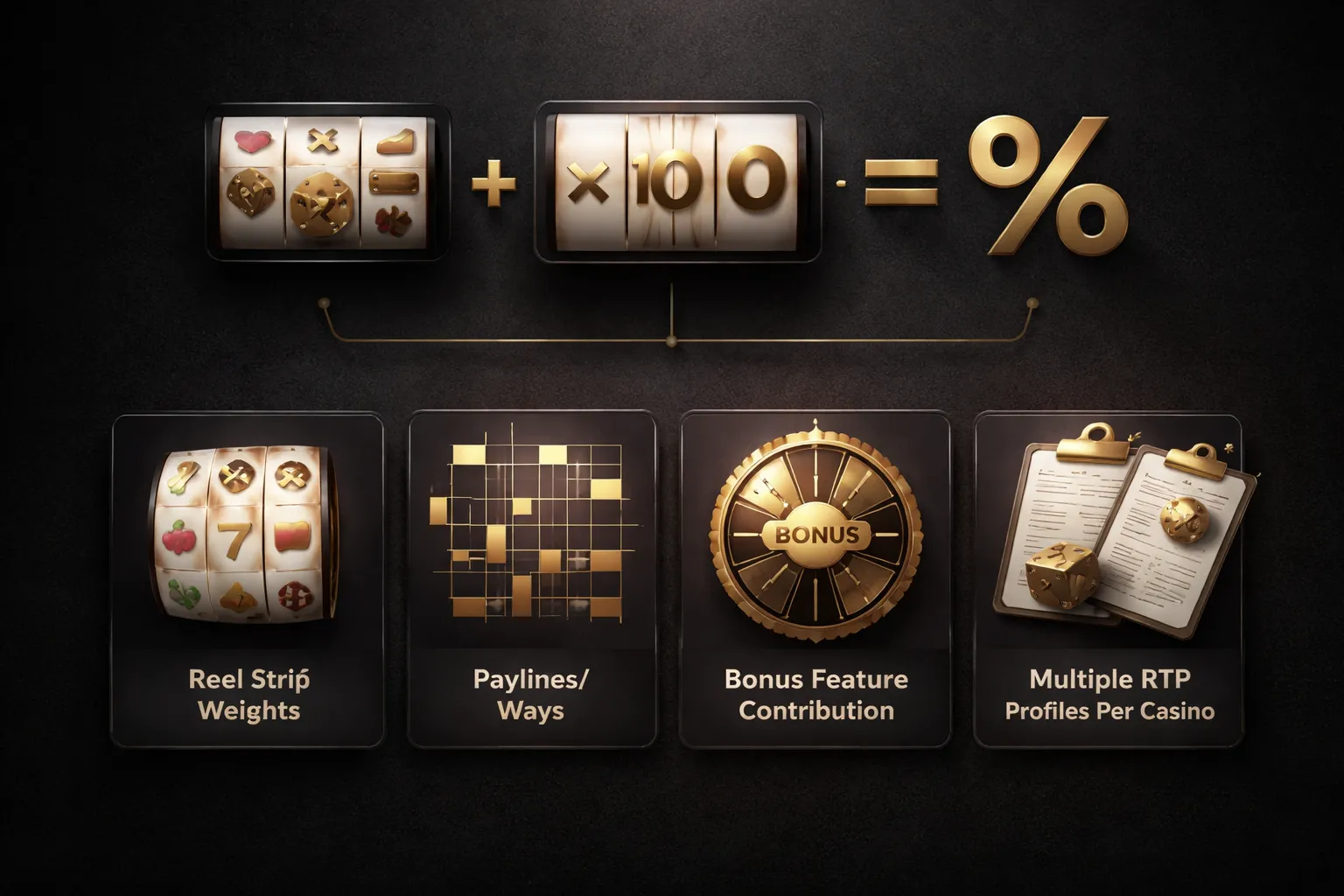
How Slot RTP Is Calculated: The Math Behind the Published Percentage
Slot RTP (Return to Player) is a long-run average built from the game’s probability model. Each symbol combination has a set chance of landing (driven by reel strips or virtual weights) and a defined payout in the paytable. To calculate RTP, developers multiply each outcome’s probability by its payout, then sum every possible outcome across all lines/ways and bonus features. That total, expressed as a percentage of total wagered, becomes the published RTP—tested over massive simulated spins.
Why it varies: many modern slots ship with multiple approved RTP profiles (for example, 96%, 94%, 92%). Where regulations allow, a casino can choose which version to run. Same theme, same reels to the eye—different underlying weights and expected return. That’s also why “short-term patterns” don’t predict results: the math converges only over very large samples.
For more on myths about “beating” these systems, see Casino Myth #4: Can You Beat the System?.
Read our detailed guide: How Slot RTP Is Calculated (and Why It Varies by Casino)
Why the RTP Number Can Differ by Casino (Even for the Same Slot Title)
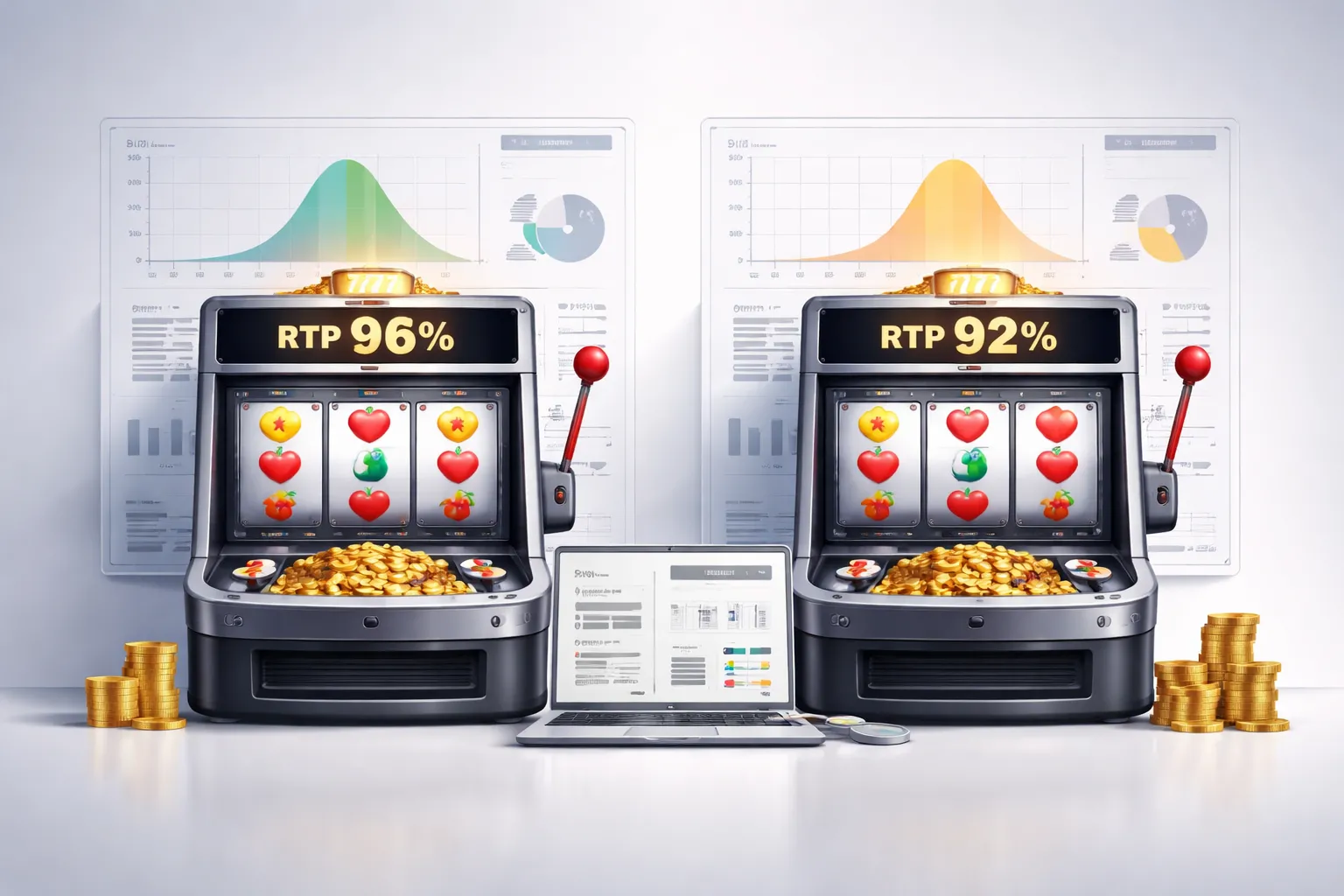
Multiple RTP Versions Exist (Same Slot Name, Different Math)
Many providers ship the same title with several certified RTP profiles—commonly 96%, 94%, or 92%. The reels can look identical, but the underlying probability weights (and therefore the long-run return) are different. Casinos don’t “change RTP day to day”; they typically choose from prebuilt versions.
The Casino Chooses the Configuration at Launch
At integration, the operator selects which RTP profile to deploy. That choice is usually driven by:
- Jurisdiction: what’s allowed or expected in that market.
- Risk profile: volatility preferences and bankroll planning.
- Margin strategy: competitive positioning vs. higher house edge.
Regional Rules and Market Norms Can Force Differences
Some regulators require specific disclosures or constrain available RTP settings; other regions simply develop “normal” ranges through competition. Result: the same slot title may run at a higher RTP in one country and a lower RTP in another—without any visible change to gameplay.
How to Verify the RTP on Your Exact Casino
- Open the game’s Help/Info screen and find “RTP/Return to Player”.
- Check the game rules or paytable text inside the slot.
- Compare with the provider’s official page for that edition/profile.
- Look for casino metadata (info icons, lobby details, or dedicated RTP pages).
Common Pitfalls That Create Confusion
- Outdated listings from affiliates or old reviews.
- Rounded RTP (e.g., 95.97% shown as 96%).
- Different editions (mobile vs. desktop, “classic” vs. “megaways”, re-releases).
Unrelated, but useful reading: Zeer Voordelige Vroegboekkorting: Ontdek de Voordelen, Camgirls Coaching: Unterstützung für Einsteiger, Swinging for Beginners: Etiquette, Red Flags & Terms, Camgirls Tipps: Erfolgreich im Geschäft.
How to Use RTP to Choose Slots (Without Falling for Common Traps)
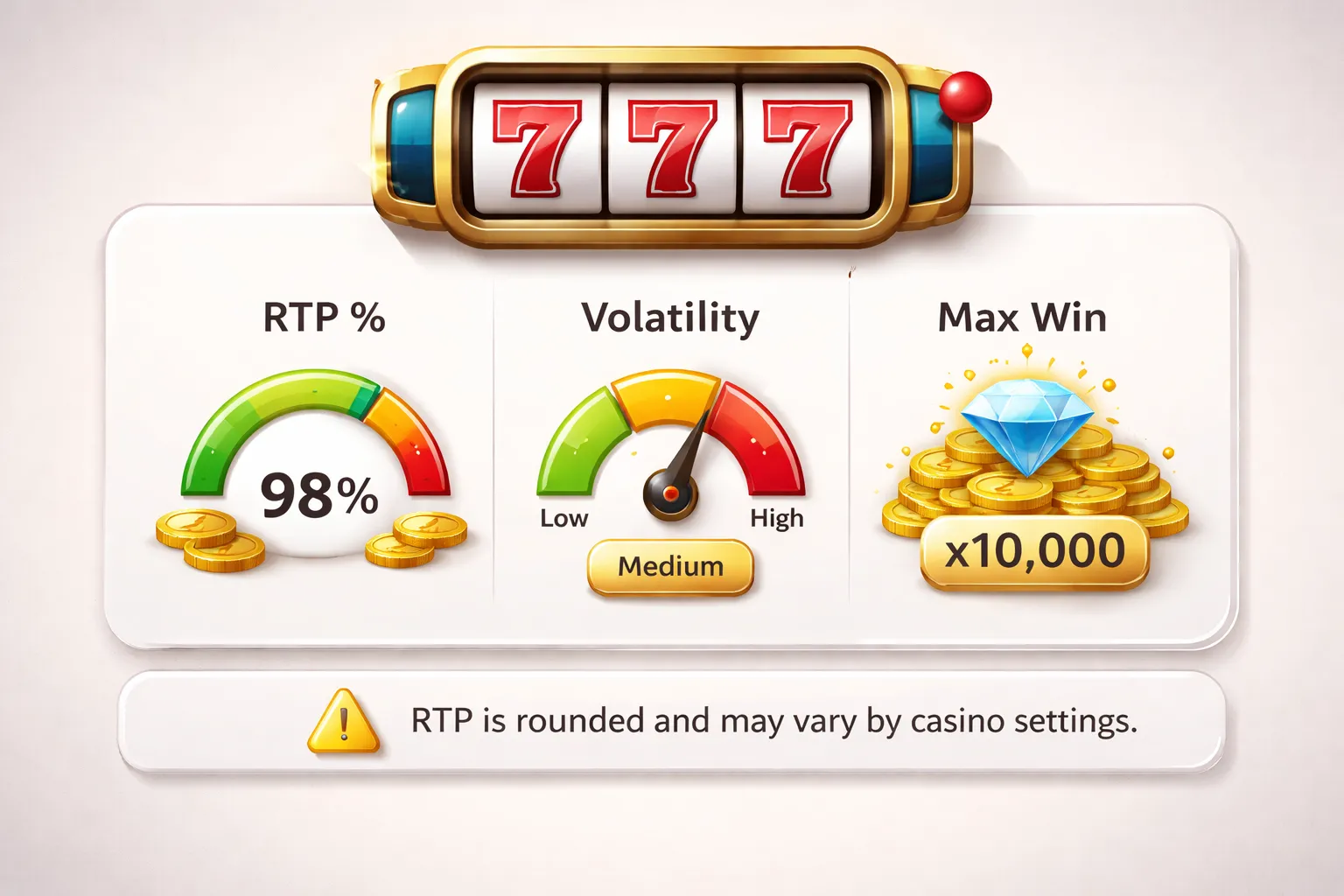
Practical RTP thresholds (and when tiny gaps matter)
Use RTP as a filter, not a promise. As a rough baseline: <94% is usually poor, 94–96% is average, 96%+ is solid. But don’t overreact to decimals: a “96%” display may be 95.97% rounded up, and casinos may run different RTP configs for the same title.
Small differences only matter if you play a lot. Over a short session, variance drowns out a 0.2–0.5% RTP gap.
Pair RTP with volatility, max win, and bankroll
RTP tells you the long-run return; volatility tells you how rough the ride is. A 97% high-volatility slot can burn bankroll faster than a 95.5% low-volatility one.
- Low–mid volatility: better for steady spins, bonus hunting, and budget control.
- High volatility + big max win: plan for long dead stretches; reduce bet size, increase spin count.
When to prioritize RTP vs entertainment
If you’re playing for time-on-device, pick higher RTP with low-to-mid volatility. If you’re paying for spectacle (themes, features, huge top prizes), accept that entertainment can cost more per hour.
Bonus buy / feature buy RTP traps
Some games disclose a separate RTP for bonus-buy mode. It may be higher, lower, or tuned differently. Treat it as a different product: verify the mode’s RTP in the paytable/info screen before buying.
Jackpot and progressive slots
Progressives are harder to compare because part of the return may be tied to the jackpot meter and contribution rate. Two casinos can show the “same” game with different effective value depending on jackpot size and rules.
For the fundamentals, see Casino Game Fairness: RNGs, Odds, House Edge & RTP. For unrelated (but useful) reading: luxe reizen met vroegboekkorting, studenten en vroegboekkorting, ontvang extra’s bij je vroegboekkorting.
RTP, Fairness, and Auditing: Who Checks the Numbers and What Players Can Trust
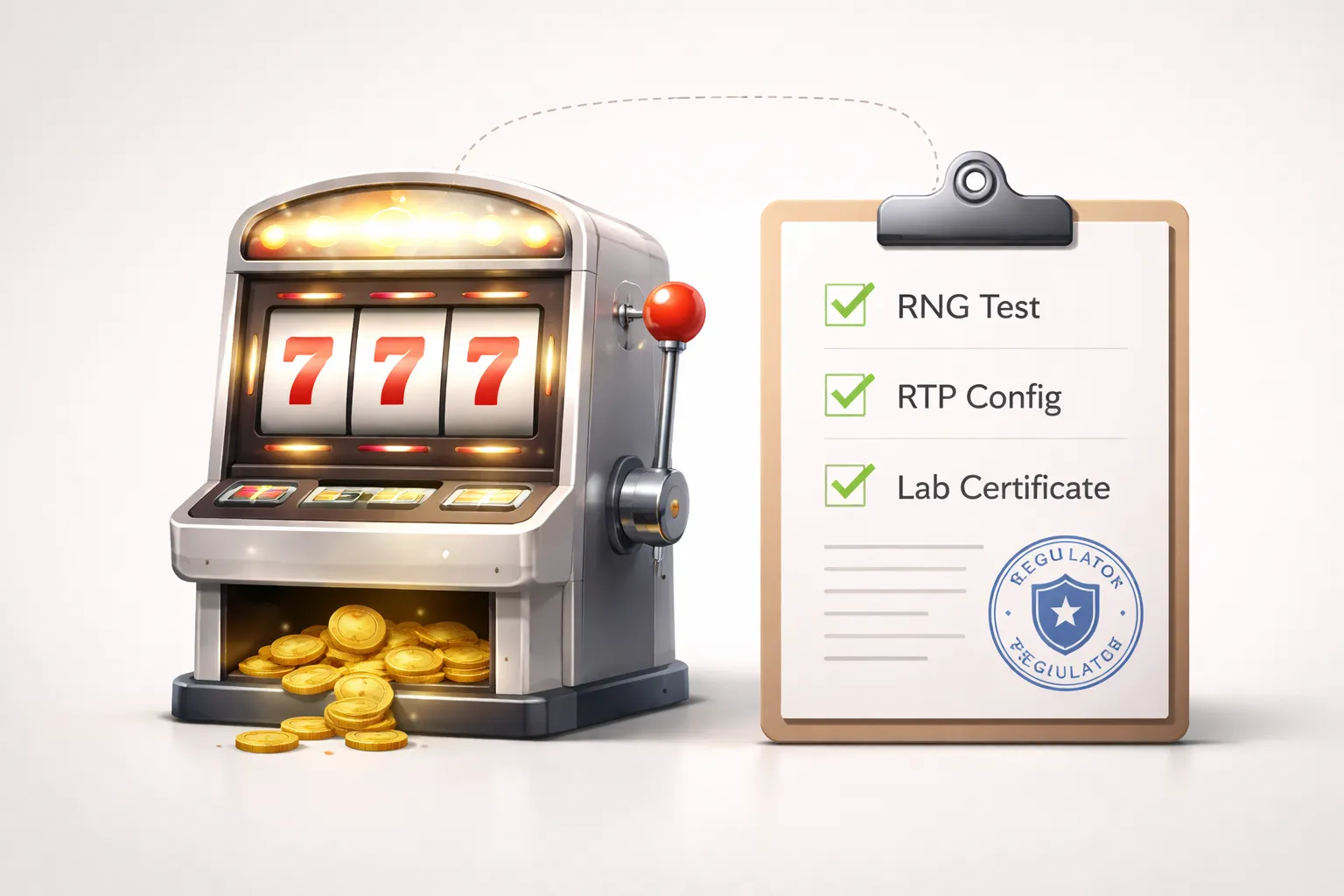
Testing Labs and Certification: Who Signs Off
In regulated markets, slot suppliers submit game builds to independent testing labs (think iTech Labs, GLI, eCOGRA) before release. Labs review the math model, verify the RNG behaves as required, and check the game matches its submitted specifications. If it passes, the game receives a certification report and can be approved by the relevant gambling authority.
What this means for players: the game code and its declared settings are checked—then the casino is expected to run only approved versions.
RNG Testing vs RTP Verification: Two Different Checks
- RNG testing focuses on randomness and integrity: outputs shouldn’t be predictable, biased, or manipulable. This is about fair outcomes per spin.
- RTP verification focuses on the payout model: the long-run expected return based on the paytable, reel/weighting, and features. Some games have multiple RTP configurations; the lab verifies each configuration as submitted.
Important nuance: an RNG can be “fine” while a casino selects a lower RTP configuration where allowed. That’s not “rigged”—it’s a settings choice.
“Provably Fair” (Crypto) vs Standard Audits
Provably fair systems use cryptographic seeds so you can verify that a result wasn’t altered after the fact. That’s different from regulated auditing, where trust comes from licensing, lab certification, and compliance checks—not player-side verification.
Red Flags Players Shouldn’t Ignore
- Missing rules (paytable, volatility, jackpot contribution, max win limits).
- No RTP disclosure or vague “up to” claims without a number.
- Unlicensed operators or unverifiable licenses/certificates.
For a better baseline on trust signals (and a reminder that not every “fair” system feels generous), see ENM Glossary: Safer Sex, Health & Logistics Terms—different topic, same principle: clear rules beat blind faith.
Key Takeaways: RTP in One Minute
Key Takeaways: RTP in One Minute
- In het kort: RTP (Return to Player) is the long-run, math-based payback of a slot—not a promise for your next 100 spins.
- In het kort: The same slot title can run on different RTP configurations depending on the casino (and sometimes region/platform).
- In het kort: Higher RTP can help, but it won’t cancel out volatility: low-volatility slots pay smaller wins more often; high-volatility slots swing harder and may go cold.
- In het kort: Always read the feature rules: bonus buy costs, wager multipliers, capped jackpots, max win limits, and retrigger odds can matter as much as the RTP number.
- In het kort: Use RTP as a filter, then match the game to your bankroll and time horizon—short sessions are variance-heavy by design.
- In het kort: Trust signals: clear RTP disclosure, licensed operator, and auditable testing. For the licensing basics, see Casino Regulation and Licensing: Rules, Security, Fairness.
- In het kort: If a casino only says “up to” with no RTP number, treat it as a red flag. Clear rules beat vibes—same principle as Consent & Agreements.
FAQ: Slot RTP Settings and Calculations
Is higher RTP always better?
Not always. Higher RTP improves long-run payback, but your session can still lose fast. Game fit matters: bet size, bankroll, and volatility. Don’t assume “due wins” after losses; that’s the logic error behind the gambler’s fallacy.
Can a casino change RTP after I start playing?
Usually not mid-session. RTP is set by the game configuration loaded when the instance starts. A casino may offer different RTP variants and switch which one is available later. Licensed operators should log configurations and changes.
How do I find the exact RTP for a slot in a specific casino?
Check the game’s info/help screen (often “i”): look for “RTP” or “Return to Player.” Then compare with the casino’s game page and the provider’s listing. If they only say “up to” with no number, treat it as a red flag.
What’s the difference between RTP and volatility?
RTP is the theoretical long-run return percentage. Volatility (variance) is how winnings are distributed: low volatility pays smaller wins more often; high volatility pays bigger wins less often. Two slots can share RTP but feel totally different.
Do bonus buys have a different RTP than normal play?
Often, yes. Some games publish separate RTPs for base game and bonus buy, or the buy feature changes the math model. Always check the specific feature’s RTP in the rules. If it’s not disclosed, assume uncertainty.
Why do two websites list different RTPs for the same game?
Many slots ship with multiple RTP variants (e.g., 96% vs 94%). One site may quote the highest “up to” value, another the local casino’s configured RTP. Outdated pages and country-specific versions also cause mismatches.
Side note: early-bird travel deals can also vary by provider and timing—see Vroegboekkorting Groepsreizen, Unieke bestemmingen met vroegboekkorting ontdekken, and Vroegboekkorting voor all-inclusive vakanties.
Conclusion: Use RTP as a Smart Filter, Not a Guarantee
Conclusion: Use RTP as a Smart Filter, Not a Guarantee
RTP is a long-run average, not a promise for your next session. Use it to screen out weak options, then let volatility and rules decide whether a slot fits your bankroll and goals. Just like early-bird deals vary by provider and timing, casinos can offer different RTP configurations for the same game—so always verify what you’re actually getting (see Vroegboekkorting beschikbaarheid: Wanneer en waar te boeken? and Vroegboekkorting op Vakantieboeken: Maximale Besparingen).
- Start with RTP: Prefer higher RTP when all else is equal; treat tiny differences as minor.
- Match volatility to bankroll: Low volatility for longer play; high volatility for bigger swings and rarer hits.
- Check the rules that change value: Paylines/ways, bonus buy availability, max win cap, bet limits, and feature frequency.
- Look for session-killers: Harsh wagering terms, restricted bonuses, or settings that reduce feature access.
- Sanity-check your intent: If you’re chasing losses or feel out of control, pause and use support resources (Gambling Addiction Signs: Warning Signs and Help Options).
Confirm the RTP version inside the casino. Check the game’s info panel, help/paytable, or the casino’s game details page. If it’s not stated, ask support or pick a title with transparent settings.
Final tip: Build a short list of high-RTP games you enjoy, then rotate based on volatility—don’t “relationship-test” one slot for hours. If you want a different kind of risk checklist, see Swinging Events & Lifestyle Parties: Safe Beginner Guide.
-
Online vs Land-Based Casino Odds: Rules & House Edge
1 month ago -
Casino Betting Systems: Myths, Hot Streaks & “Due” Numbers
1 month ago -
Online vs In-Person Casino Odds: RNGs & Fair Play
1 month ago -
Casino Security, Fairness & Regulation Explained
1 month ago -
Signs of Gambling Addiction: Warning Signs & Help Options
1 month ago
-
Signs of Gambling Addiction: Warning Signs & Help Options
1 month ago -
Casino Betting Systems: Myths, Hot Streaks & “Due” Numbers
1 month ago -
Casino Systems Myth: Can You Really Gain an Edge?
1 month ago -
Online vs In-Person Casino Odds: RNGs & Fair Play
1 month ago -
Online vs Land-Based Casino Odds: Rules & House Edge
1 month ago
-
Online vs Land-Based Casino Odds: Rules & House Edge
1 month ago -
Casino Betting Systems: Myths, Hot Streaks & “Due” Numbers
1 month ago -
Online vs In-Person Casino Odds: RNGs & Fair Play
1 month ago -
RTP Explained: How to Use Return to Player to Choose Slots
1 month ago -
Casino Security, Fairness & Regulation Explained
1 month ago