How Slot RTP Is Set: Design, Paytables & RNG

RTP looks like a promise. It isn’t. It’s a long-run return model built into the math—over millions of spins, not your next session. This chapter breaks down how designers set RTP through paytables and RNG behavior, and why the “same” slot can pay differently depending on where you play. For the full overview, see How Slot RTP Is Set and Why It Varies by Casino.
What RTP tells you: the theoretical percentage of stakes a game returns over an enormous sample size, assuming consistent rules and configuration.
What RTP doesn’t tell you: when wins arrive, how rough the ride feels (volatility), or whether you’re “due.” That last idea is the same trap behind the gambler’s fallacy—see Gambler’s Fallacy Explained: Common Mix-Ups and Examples.
Why players see different RTPs for the same slot: many titles ship with multiple RTP settings (for example, 96% and 94%). Casinos can choose which configuration to run, and regulators may allow different ranges by market. On top of that, bonus rules, bet features, and regional builds can change the underlying return profile even when the theme and name match.
RTP Explained: What Return to Player Means (and How It’s Measured)
RTP Explained: What Return to Player Means (and How It’s Measured)
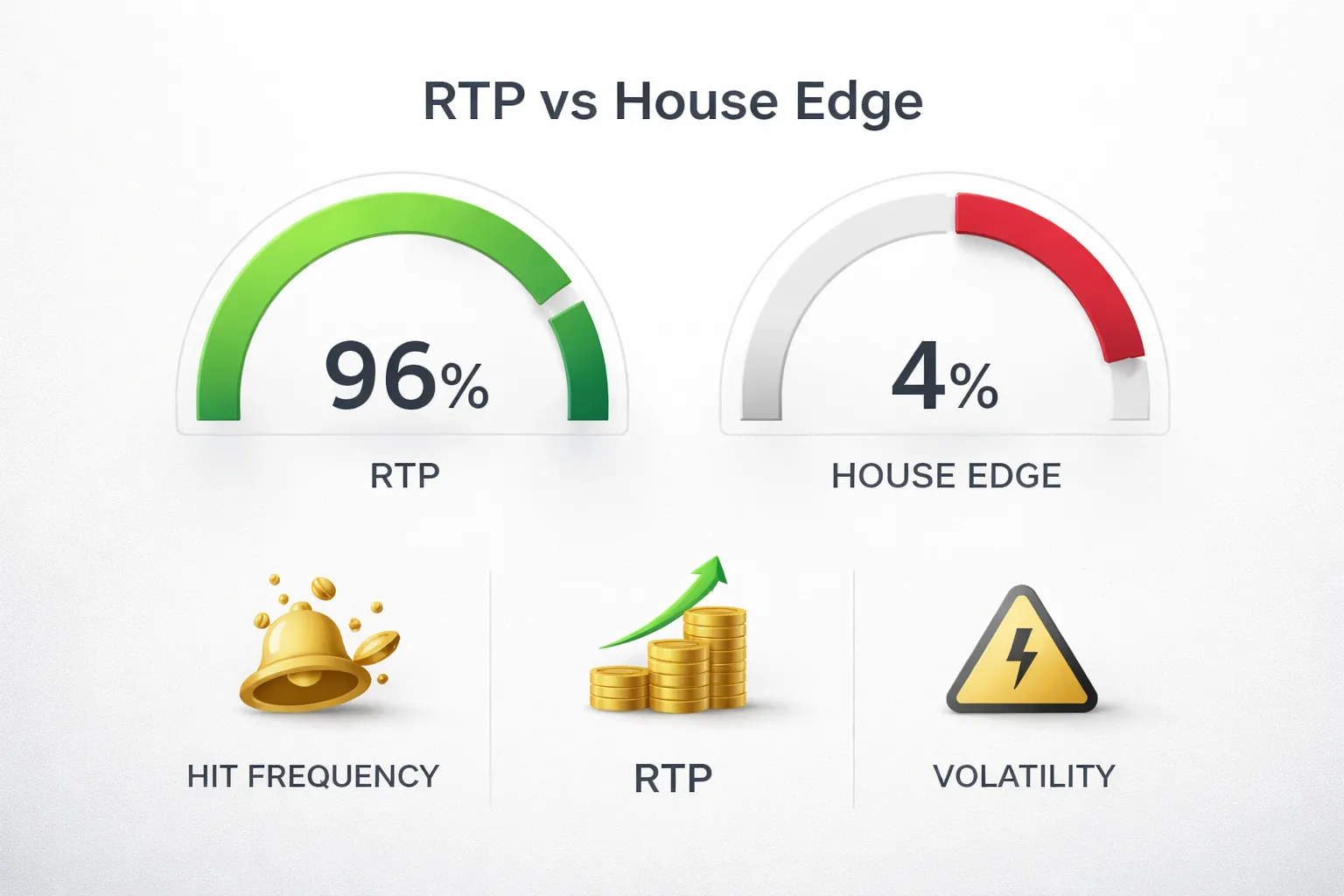
Return to Player (RTP) is the theoretical percentage of total stakes a slot is designed to pay back over a very large number of spins. If a game has 96% RTP, it’s modeled to return about $96 for every $100 wagered—across the entire player base and the long run, not your next 100 spins.
RTP vs House Edge (Same Math, Different Side)
House edge is what remains after RTP:
- House edge = 100% − RTP
- Example: 96% RTP → 4% house edge
- Example: 94% RTP → 6% house edge
That’s why small RTP differences matter: they compound over volume.
The “Long Run” Problem: Variance and Sample Size
RTP is measured through math models and verified by simulation/testing of the RNG outcomes, but the key is scale. Slots are high-variance systems: big wins are rare, and results cluster unpredictably in short sessions. A few hundred or even a few thousand spins can sit far above or below the stated RTP, so “it paid 110% today” or “it’s dead” isn’t proof of the real return.
RTP vs Hit Frequency vs Volatility (Don’t Mix These Up)
- RTP: expected long-run payout percentage.
- Hit frequency: how often any win occurs (can be many small wins).
- Volatility: how swingy payouts are (rare huge wins vs steady small ones).
A slot can have high RTP and still feel brutal if volatility is high—or feel “busy” with frequent tiny hits while still losing over time.
For responsible play guardrails, see Self-Exclusion Rules: Laws, Privacy and Compliance.
How Slot RTP Is Set in Game Design: Paytables, Features, and Math Models
Starting point: concept and target volatility
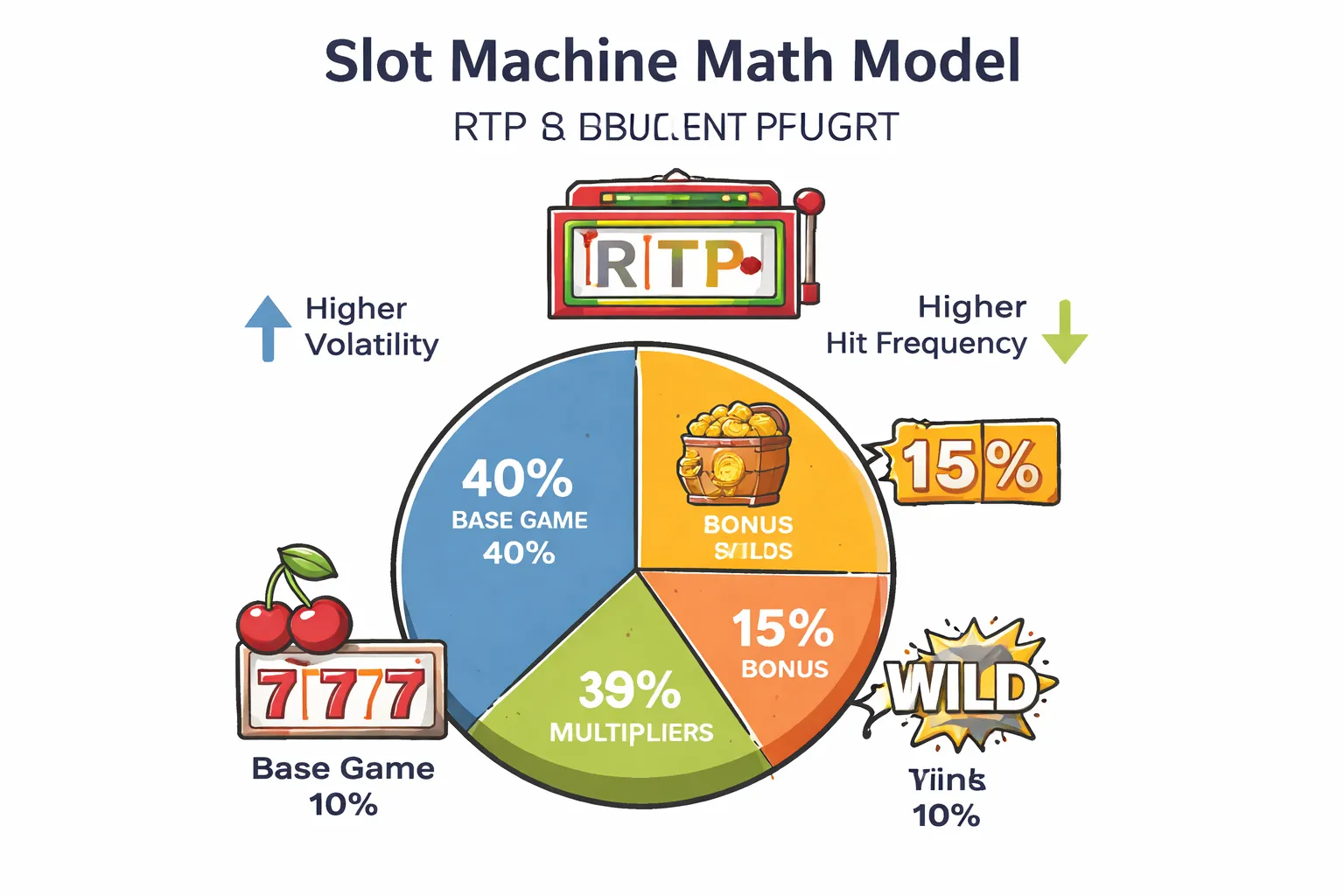
RTP starts as a design target, not an afterthought. The math model is built around the game’s theme, pace, and a chosen volatility profile: low volatility aims for frequent smaller wins; high volatility concentrates value into rare, larger hits. This choice shapes everything that follows: symbol spread, bonus frequency, and the size of the top prize.
Paytable design: symbol values and payout distribution
Designers set a paytable by assigning payouts to each symbol/combination and then balancing how often those outcomes can occur. A higher top prize usually forces lower average line hits (or lower hit rates) to keep total RTP on target. The key isn’t just “what pays,” but where the RTP sits: in small base hits, in mid-tier combos, or in the extreme tail (jackpot-style outcomes).
Base game vs bonus features: allocating RTP
RTP is “budgeted” across modes. Example: a game might allocate more RTP to free spins/bonuses and less to base play, creating long dry spells followed by spikes. Moving the budget changes perceived fairness without changing the headline RTP.
Wilds, scatters, multipliers, cascades/ways
- Wilds raise completion odds for paying combos, often increasing hit frequency while reducing individual symbol values to compensate.
- Scatters control bonus access; their frequency is a primary volatility lever.
- Multipliers concentrate RTP into fewer events, typically increasing volatility.
- Cascades/ways create chained wins; designers offset this with tighter base payouts or stricter symbol distribution.
Contribution mapping: tuning RTP without changing the feel
Studios use contribution mapping (RTP by component) to tweak return while preserving “feel.” They can adjust reel weights, bonus triggers, or multiplier distribution so the game plays similarly—yet lands on a different certified RTP.
For a contrast in how “offers” are structured and presented, see Camgirls Angebot: Alles was du wissen musst.
-
Online vs In-Person Casino Odds: RNGs & Fair Play
4 months ago -
Online vs Land-Based Casino Odds: Rules & House Edge
4 months ago -
Casino Betting Systems: Myths, Hot Streaks & “Due” Numbers
4 months ago -
Signs of Gambling Addiction: Warning Signs & Help Options
4 months ago -
Casino Security, Fairness & Regulation Explained
4 months ago
-
Signs of Gambling Addiction: Warning Signs & Help Options
4 months ago -
Casino Betting Systems: Myths, Hot Streaks & “Due” Numbers
4 months ago -
Casino Systems Myth: Can You Really Gain an Edge?
4 months ago -
Online vs In-Person Casino Odds: RNGs & Fair Play
4 months ago -
Online vs Land-Based Casino Odds: Rules & House Edge
4 months ago
-
Online vs In-Person Casino Odds: RNGs & Fair Play
4 months ago -
Online vs Land-Based Casino Odds: Rules & House Edge
4 months ago -
RTP Explained: How to Use Return to Player to Choose Slots
4 months ago -
Casino Betting Systems: Myths, Hot Streaks & “Due” Numbers
4 months ago -
The Gambler’s Fallacy Explained (With Simple Examples)
4 months ago