Psychology of the Gambler’s Fallacy (With Examples)

Introduction: Why the Gambler’s Fallacy Feels So Convincing
Flip a fair coin and land on heads six times. Most people feel tails is “due.” Watch a roulette wheel hit red again and again. The next spin must be black, right? That gut certainty is the gambler’s fallacy: the urge to treat random streaks as if they create a correction.
This section breaks down why the bias feels logical even when it isn’t. You’ll learn the core definition, the psychology that fuels it (pattern-hunting, discomfort with randomness, and the “law of small numbers”), simple real-world examples, and practical ways to avoid the trap—whether you’re reading sports stats, tracking sales leads, or looking at any streaky data.
This is an informational concept from psychology and basic statistics—not gambling advice, and not a strategy for beating games of chance. For the plain-language walkthrough, start here: The Gambler’s Fallacy Explained (With Simple Examples).
- Also useful context: Online vs Land-Based Casino Odds: What Changes?
- Unrelated reads you may see on this site: Must-know wenken voor succesvol boeken met vroegboekkorting, Vliegvakanties met Vroegboekkorting: Hoogvliegers voor Minder, Swinging Events & Lifestyle Parties: Safe Beginner Guide
The Gambler’s Fallacy Explained (With Simple Examples)
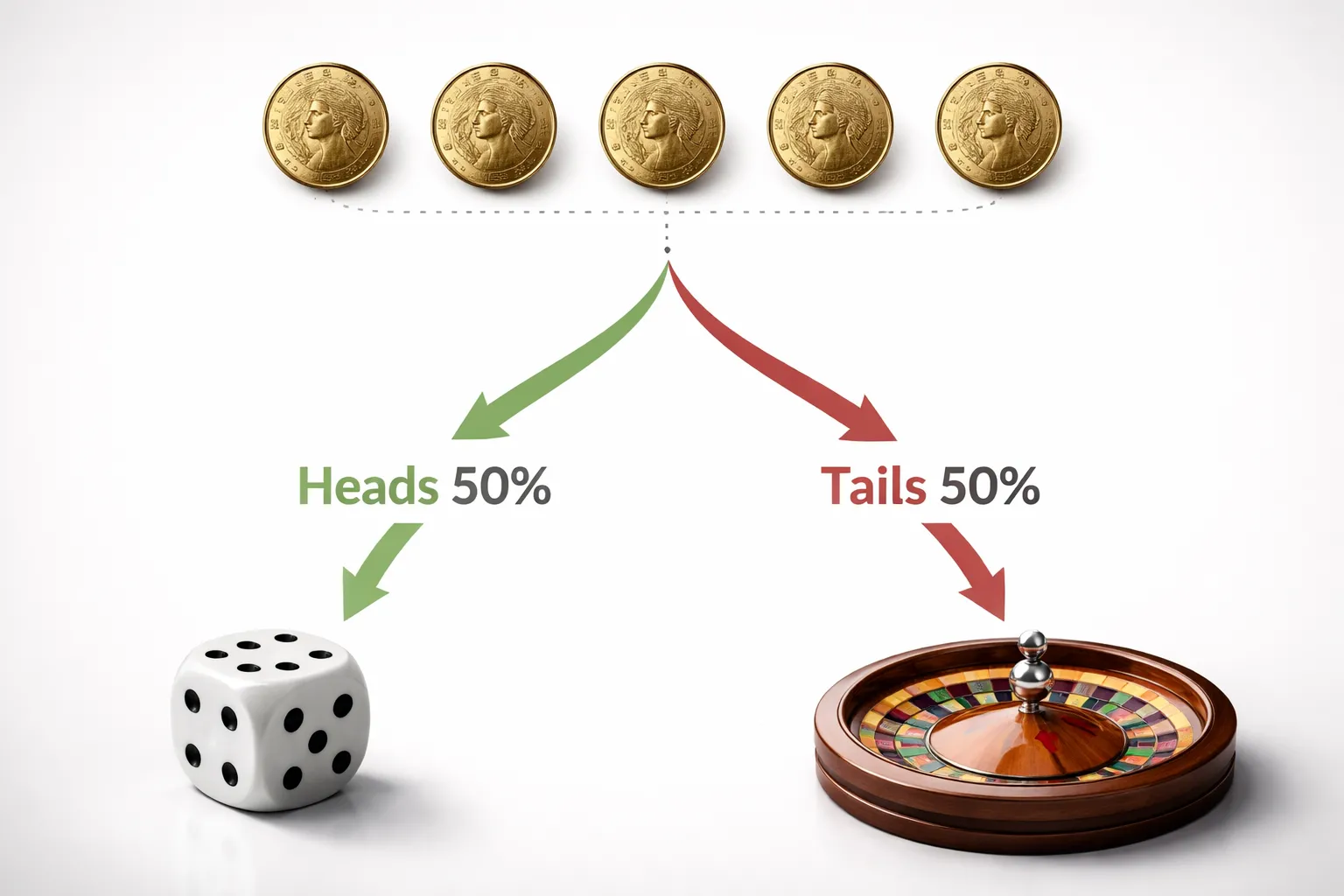
Plain-English definition
The gambler’s fallacy is the belief that a random result is “due” after a streak. You see a run of one outcome and assume the next outcome must balance it out. In fair games, that’s wrong: randomness has no memory.
Simple examples (coin, dice, roulette, lottery)
- Coin flips: After five heads in a row, you think tails is “more likely.” It isn’t.
- Dice: After many non-6 rolls, you feel a 6 is “coming.” Each roll is still the same odds.
- Roulette: Red hits eight times, so you bet black because it’s “due.” The wheel doesn’t track history. (Also note: house rules and procedures matter—see casino etiquette and how games are run.)
- Lottery numbers: You avoid “recent” numbers and chase “overdue” numbers. But draws are independent; “hot” and “cold” numbers are stories, not advantages.
Independence vs. dependency
Independence means the next result doesn’t depend on the last one. A fair coin doesn’t get tired of heads. A well-maintained roulette wheel doesn’t owe you black. Dependency is different: if a process can be influenced (a loaded die, a biased wheel, a rigged RNG), past outcomes might reveal a pattern. That’s why fairness and oversight matter in casinos—see casino security, fairness, and regulation.
Mini “math-light” explanation
Each flip/spin/roll starts fresh. If a coin is fair, the chance of heads is 1/2 every time—whether the last five were heads or tails. Streaks look meaningful, but they’re normal in randomness.
Unrelated but common on this site: travel deals like which hotels offer early-booking discounts, and other lifestyle topics such as what camgirls are.
Why It Feels True: The Psychology Behind the Gambler’s Fallacy

Law of Small Numbers: “It has to even out”
Your brain expects a short run to look “fair.” Five coin flips should feel like 2–3 heads, 2–3 tails. When you see HHHHH, it triggers a false alarm: this can’t be random. But randomness is lumpy. Small samples are noisy, not balanced.
Pattern Perception & Apophenia: meaning in the static
Humans are pattern-finders. It’s how we survive. The downside: we detect “signals” in pure chance—hot numbers, “cold” slots, a dealer “due” to bust. That’s apophenia: seeing structure where none exists. The streak becomes a story, not a statistic.
Representativeness Heuristic: judging by what feels typical
We label outcomes as likely when they match our mental image of randomness. Alternating results (HTHTTH) feel random, so we treat them as more probable than they are. A streak feels “unlikely,” so we overcorrect and assume reversal—even though each trial is still independent.
Need for Predictability and Control
Uncertainty is uncomfortable. The gambler’s fallacy offers a counterfeit sense of control: “If I wait for the turn, I can time the win.” It turns chaos into a schedule. That same craving for certainty shows up far outside casinos—from relationship debrief habits to lifestyle curiosity like how to debrief after swinging with your partner or explorations of Camgirls Privat: Exklusive Inhalte.
Emotional Reinforcement: relief, regret, and “near-miss” logic
Wins create relief (“I knew it was due”). Losses create regret (“I should’ve pressed one more time”). Near-misses are worst: they feel like progress, not failure, training you to keep chasing. The brain learns emotions, not odds—like expecting extra value after planning ahead with effectieve strategieën om vroegboekkorting te benutten or hunting a bonus bij vroegboekkorting.
The Brain’s Shortcuts: Cognitive Biases That Feed ‘Due’ Thinking
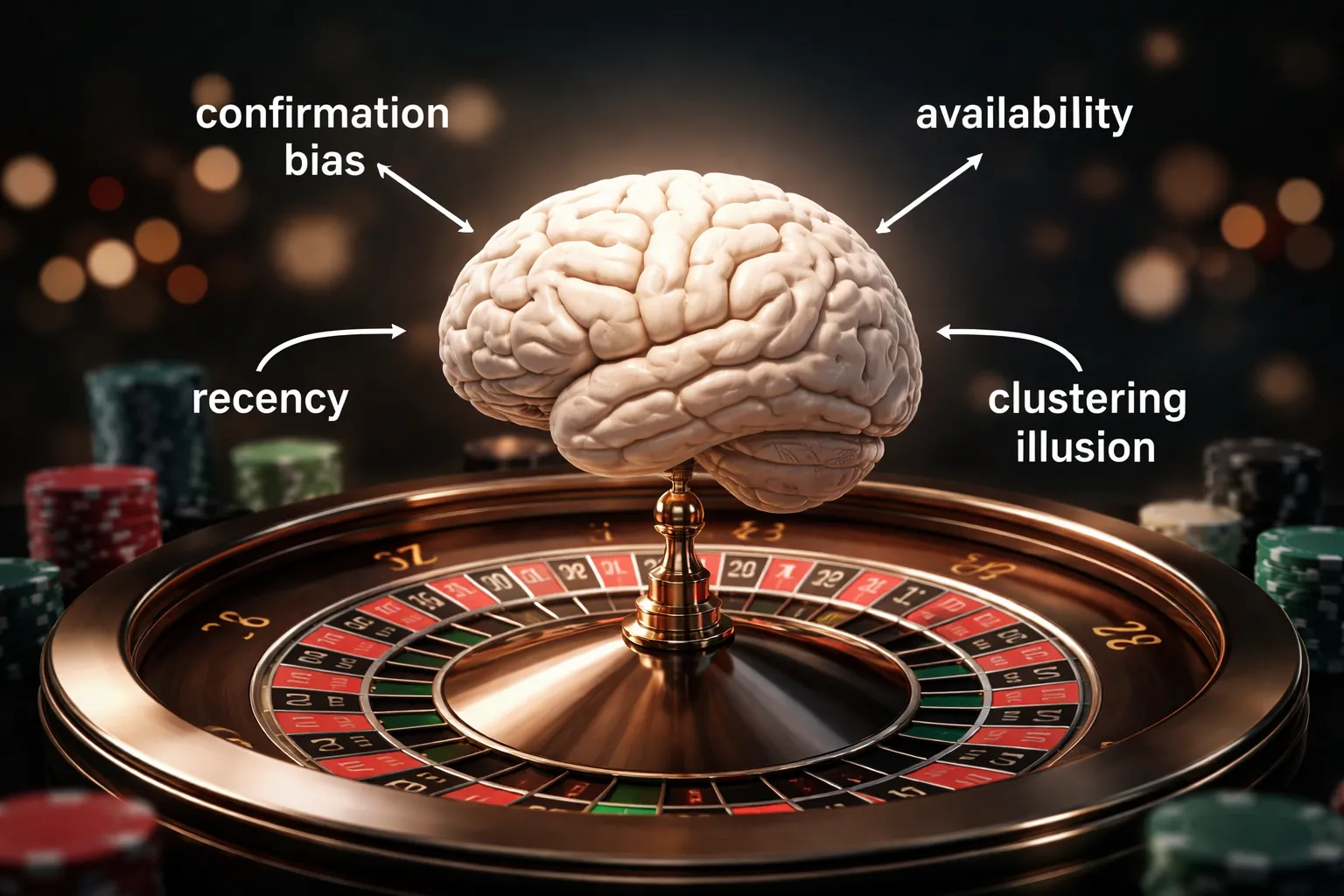
Confirmation Bias: Remembering Hits, Forgetting Misses
“I knew it was due” sticks because your brain keeps the “proof” and deletes the counterexamples. You remember the one time you doubled down after five reds and finally hit black. You forget the other nights the streak kept running and you bled chips. This selective memory turns randomness into a personal pattern—like a private club reinforcing itself, the way people in Camgirls Gruppen: Gemeinsamkeiten teilen can echo the same assumptions until they feel true.
Availability Heuristic: Vivid Streaks Feel Common
Big streaks are memorable: ten losses in a row, a “miracle” comeback, a near-miss that felt inches from winning. Because these stories are easy to recall, your brain overestimates how often they happen. The dull truth—most sequences look unremarkable—doesn’t get stored with the same emotional weight.
Recency Bias: The Latest Run Feels Like the Rule
After three wins, you feel “hot.” After five losses, you feel “due.” Recency bias overweight the last few outcomes and underweights the base rate. It’s the same mental shortcut behind assuming planning must pay off—like expecting extra value simply because you researched vroegboekkorting vs last minute or hunted deals in welke hotels bieden vroegboekkorting aan.
Clustering Illusion: Randomness “Should” Look Even
People expect random data to alternate neatly. But true randomness naturally forms clumps: repeated numbers, long runs, empty gaps. When reality clumps, your brain calls it a signal—and “due thinking” rushes in to “correct” it.
Hot-Hand vs. Gambler’s Fallacy
- Gambler’s fallacy: after a streak, you expect reversal (“black is due”).
- Hot-hand fallacy: after a streak, you expect continuation (“I’m on fire”).
Both mistake noise for momentum—whether you’re chasing spins or chasing “one more” in private, high-intensity settings like Camgirls Privat: Exklusive Inhalte.
Where It Shows Up Beyond Gambling (And Why It Matters)
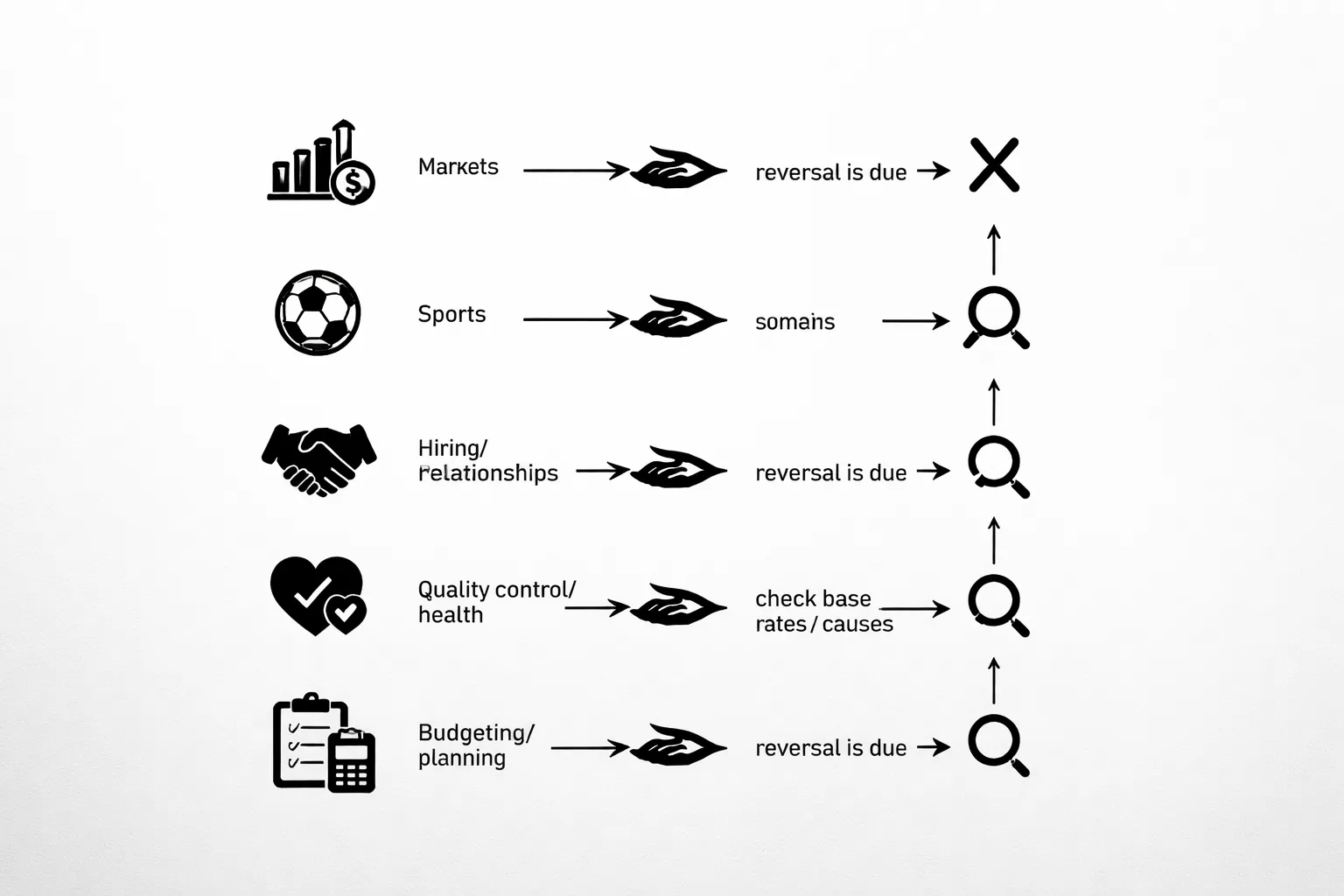
Investing/Trading: “It Dropped, So a Rebound Is Due”
Markets don’t “owe” you a bounce. A stock can fall for rational reasons, then keep falling. The gambler’s fallacy turns a losing streak into a buy signal, encouraging knife-catching, over-leveraging, and doubling down instead of reassessing the thesis.
Sports Fandom: “They Can’t Miss Forever” vs. Real Skill
Fans confuse probability with fairness. A team can keep bricking shots because shot quality is bad, defense is elite, or fatigue is real. Sometimes there is a true skill effect (injury, matchup, form). The mistake is assuming reversal without checking causes.
Hiring/Relationships: Turning Streaks into Destiny
Three bad interviews doesn’t mean the next candidate is “the one.” A run of great dates doesn’t guarantee the next will be perfect. When you treat random clusters as fate, you stop measuring fit, values, and evidence—and start chasing emotional relief.
Quality Control/Health: Random Clusters Aren’t Always Trends
Two defects in a row can happen in a stable process. A week of headaches can be noise—or a signal. The fallacy pushes you to overreact to clumps, either by “fixing” what isn’t broken or ignoring real root causes because “it’ll swing back.”
Decision Risk: Why It Leads to Bad Betting, Budgeting, and Planning
- Betting: Bigger wagers after losses (“due”) escalate risk fast.
- Budgeting: Overspending after a “frugal streak,” as if restraint earned a reward.
- Planning: Betting timelines on “luck turning,” instead of buffers and base rates.
Want a cleaner antidote? Build decisions around odds and constraints—like locking value early with reispakketten met vroegboekkorting, exploring stadsuitjes met vroegboekkorting, choosing vroegboekkorting voor luxereizen, or checking populaire bestemmingen met vroegboekkorting—not gut feelings about what’s “due.”
How to Avoid the Gambler’s Fallacy: Practical Mental Checks

Ask: Independent, or linked by a mechanism?
Before you trust a “due” feeling, ask one blunt question: What makes the next outcome depend on the last? A fair coin, roulette wheel, or random booking availability doesn’t remember. If there’s no mechanism (wear, rules, feedback loop), treat each event as independent.
Base rates first
Return to the true probability, not the story in your head. If an event is 1-in-6, it stays 1-in-6 after five misses. When planning purchases, anchor to real odds and constraints—timelines, budgets, cancellation terms—then decide. The same logic applies to pricing: check how early deals actually move costs in Invloed van vroegboekkorting op de prijs van je vakantie, not vibes about “prices must drop.”
Reframe streaks: unlikely ≠ impossible
A streak feels meaningful because your brain hates randomness. But “rare” isn’t “can’t happen.” Ten reds in a row is unlikely; the next spin is still close to 50/50 (on a fair setup). Say it out loud: “This streak doesn’t force a correction.”
Use tracking correctly
Tracking is for long-run frequencies, not short-run “balance.” A log can tell you if you’re profitable over 1,000 bets—not whether you’re “owed” a win after three losses. Apply the same discipline to spending: compare options early using known constraints, like Vroegboekkorting Vakanties: Beste Keuzes voor 2024 or Vliegvakanties met Vroegboekkorting: Hoogvliegers voor Minder.
Simple debiasing habits
- Write predictions: “Next outcome probability = X.” No rewriting after.
- Pre-commit rules: fixed stake size, stop-loss, time limit, booking criteria.
- Slow down decisions: add a 10-minute pause; impulsive certainty fades.
Spinoff Hub Summary: Probability Basics You Actually Need (Independence, Randomness, and Streaks)
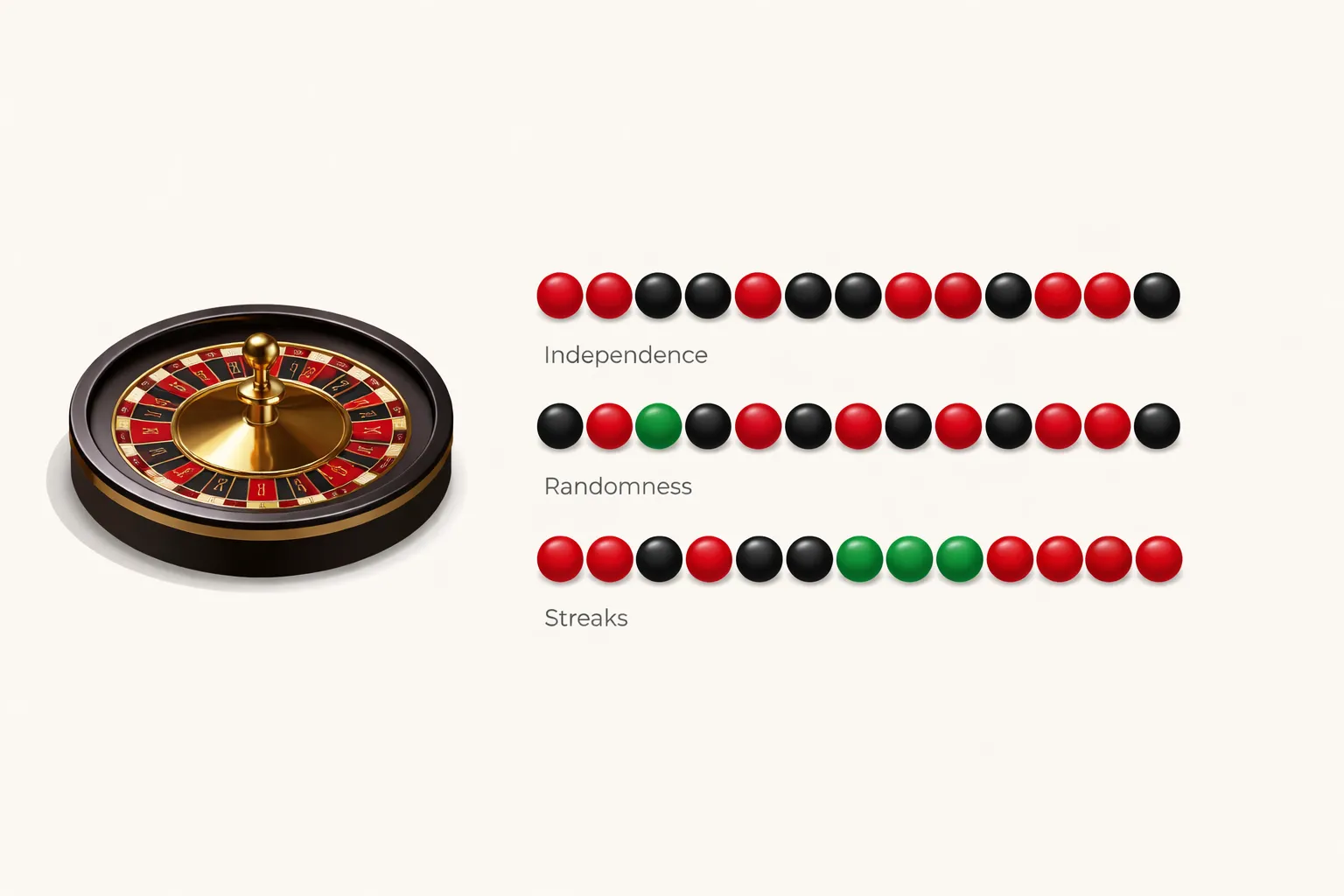
Probability basics you actually need
Three ideas kill the gambler’s fallacy fast: independence, randomness, and streaks. Independence means one spin/draw/hand doesn’t “remember” the last one—if the game is fair, the baseline odds reset every time. Randomness means clumps happen: you’ll see repeats, droughts, and ugly runs without any hidden pattern. Streaks are not evidence of a “due” outcome; they’re normal variance you notice because your brain hates noise. Track the actual probability of the next outcome, not a story about the last five. If you suspect bias, don’t guess—look for verified oversight of the system (licensing, testing, and enforcement) and set guardrails that limit damage when you’re wrong.
- Independence: five reds don’t make black “more likely” on a fair wheel.
- Random clustering: coin flips can show long heads runs without cheating.
- Base rates first: “Next outcome probability = X” before you act.
For fairness checks, see Casino RNG Regulation: Licensing, Testing & Enforcement. If you need a hard stop, use Self-Exclusion Programs: Rules, Privacy & Compliance.
Read our detailed guide: Gambler’s Fallacy Explained: Streaks, Randomness, Odds
FAQ
Is the gambler’s fallacy the same as the law of averages?
No. The law of large numbers says long-run averages tend to stabilize. The gambler’s fallacy wrongly applies that to the short run, assuming the next flip “must” balance the past. Each fair, independent trial keeps the same odds.
Can a streak ever mean something real (when outcomes aren’t independent)?
Yes—when conditions change. Biased coins, loaded dice, slot malfunctions, card depletion in shoe games, or a player/strategy shift can create meaningful streaks. If outcomes influence each other, “due” talk may signal a real mechanism, not randomness.
What’s the difference between gambler’s fallacy and the hot-hand fallacy?
Gambler’s fallacy: after a run, the opposite is “due” (heads streak → tails next). Hot-hand: after a run, the same outcome is “more likely” (heads streak → heads next). Both mistake patterns in noise for predictive signals.
Why do casinos benefit from people believing something is ‘due’?
“Due” beliefs drive extra bets, bigger stakes, and longer sessions—especially after losses. That increases total wagering, letting house edge work. Players also chase to “complete the pattern,” ignoring base rates and bankroll limits.
How can I explain the gambler’s fallacy to a child or student?
Use a coin: “The coin has no memory.” Flip 10 heads in a row; the next flip is still 50/50 if it’s fair. Past flips don’t change the coin—only your surprise. Random can look streaky.
Note: If you’re setting “hard rules” for gambling time and money, boundaries matter—similar to consent-and-safety scripts in other adult contexts. See Swinging Boundaries: Consent, Rules, and Safer Sex.
Conclusion: Random Doesn’t Mean ‘Due’—It Means Independent
Conclusion: Random Doesn’t Mean ‘Due’—It Means Independent
The gambler’s fallacy is the gut-level belief that a run of outcomes “should” be corrected soon—heads after too many tails, a win after a losing streak, red after black. It feels true because your brain is built to spot patterns and restore balance, even when the system has no memory.
The key reminder: independence plus small samples create misleading intuition. Flip 10 heads in a row; the next flip is still 50/50 if it’s fair. Past flips don’t change the coin—only your surprise. Random can look streaky, and streaks don’t carry a debt that reality must repay.
- Independence check: Does each event reset (coin, roulette spin, RNG)? If yes, “due” is a story, not a statistic.
- Sample-size check: Am I drawing conclusions from a short streak instead of long-run odds?
- Incentive check: Would I make the same choice if I hadn’t just lost—or just won?
Actionable next step: use those three checks before any bet, purchase, or “one more try” decision. If you need hard boundaries, consider formal tools like self-exclusion rules, or borrow the mindset of clear limits and safety from consent-and-boundaries frameworks.
Final tip: Treat streaks like weather—interesting, not instructive. Decide with odds and limits, not with vibes.
-
Online vs Land-Based Casino Odds: Rules & House Edge
1 month ago -
Casino Betting Systems: Myths, Hot Streaks & “Due” Numbers
1 month ago -
Online vs In-Person Casino Odds: RNGs & Fair Play
1 month ago -
Casino Security, Fairness & Regulation Explained
1 month ago -
Signs of Gambling Addiction: Warning Signs & Help Options
1 month ago
-
- Is the gambler’s fallacy the same as the law of averages?
- Can a streak ever mean something real (when outcomes aren’t independent)?
- What’s the difference between gambler’s fallacy and the hot-hand fallacy?
- Why do casinos benefit from people believing something is ‘due’?
- How can I explain the gambler’s fallacy to a child or student?
-
- Is the gambler’s fallacy the same as the law of averages?
- Can a streak ever mean something real (when outcomes aren’t independent)?
- What’s the difference between gambler’s fallacy and the hot-hand fallacy?
- Why do casinos benefit from people believing something is ‘due’?
- How can I explain the gambler’s fallacy to a child or student?
-
Signs of Gambling Addiction: Warning Signs & Help Options
1 month ago -
Casino Betting Systems: Myths, Hot Streaks & “Due” Numbers
1 month ago -
Casino Systems Myth: Can You Really Gain an Edge?
1 month ago -
Online vs In-Person Casino Odds: RNGs & Fair Play
1 month ago -
Online vs Land-Based Casino Odds: Rules & House Edge
1 month ago
-
Online vs Land-Based Casino Odds: Rules & House Edge
1 month ago -
Casino Betting Systems: Myths, Hot Streaks & “Due” Numbers
1 month ago -
Online vs In-Person Casino Odds: RNGs & Fair Play
1 month ago -
RTP Explained: How to Use Return to Player to Choose Slots
1 month ago -
Casino Security, Fairness & Regulation Explained
1 month ago