Step 3: Set Per-Bet Rules for a Gambling Budget

Most gambling budgets fail at the moment you place a bet. Step 3 fixes that: you’ve already set your total bankroll size; now you set strict per-bet rules before you start playing, and before Step 4 (tracking and review) keeps you honest. This is the line between a plan and a spiral. See the full framework in How to Set a Gambling Budget (and Stick to It).
Per-bet limits stop emotional staking: chasing losses, “one last spin,” or doubling up after a win. With clear rules, each wager stays small, repeatable, and boring—in a good way. You’re not deciding in the heat of the moment; you’re executing what you pre-decided.
Disclaimer: Gambling is entertainment, not income. If it stops being fun or feels hard to control, take a break and seek help. In many countries, you can find confidential support via national responsible-gambling services, casino self-exclusion tools, and independent helplines.
- Keep your rules simple enough to follow when you’re tired or tilted.
- Set the limit before play, not after a loss.
- Protect your bankroll first; wins are a bonus.
If you’re curious how other “rules-based” spending habits work in unrelated niches, compare the mindset behind Strategieën voor Vroegboekkorting: Hoe u meer kunt besparen and Wanneer Begint Vroegboekkorting voor Uw Reis?, or see how structured choices show up in Camgirls Neuheiten: Entdecke die Trends and Camgirls Modalitäten: Die verschiedenen Formen.
What “Per-Bet Rules” Mean (and Why They’re Non-Negotiable)
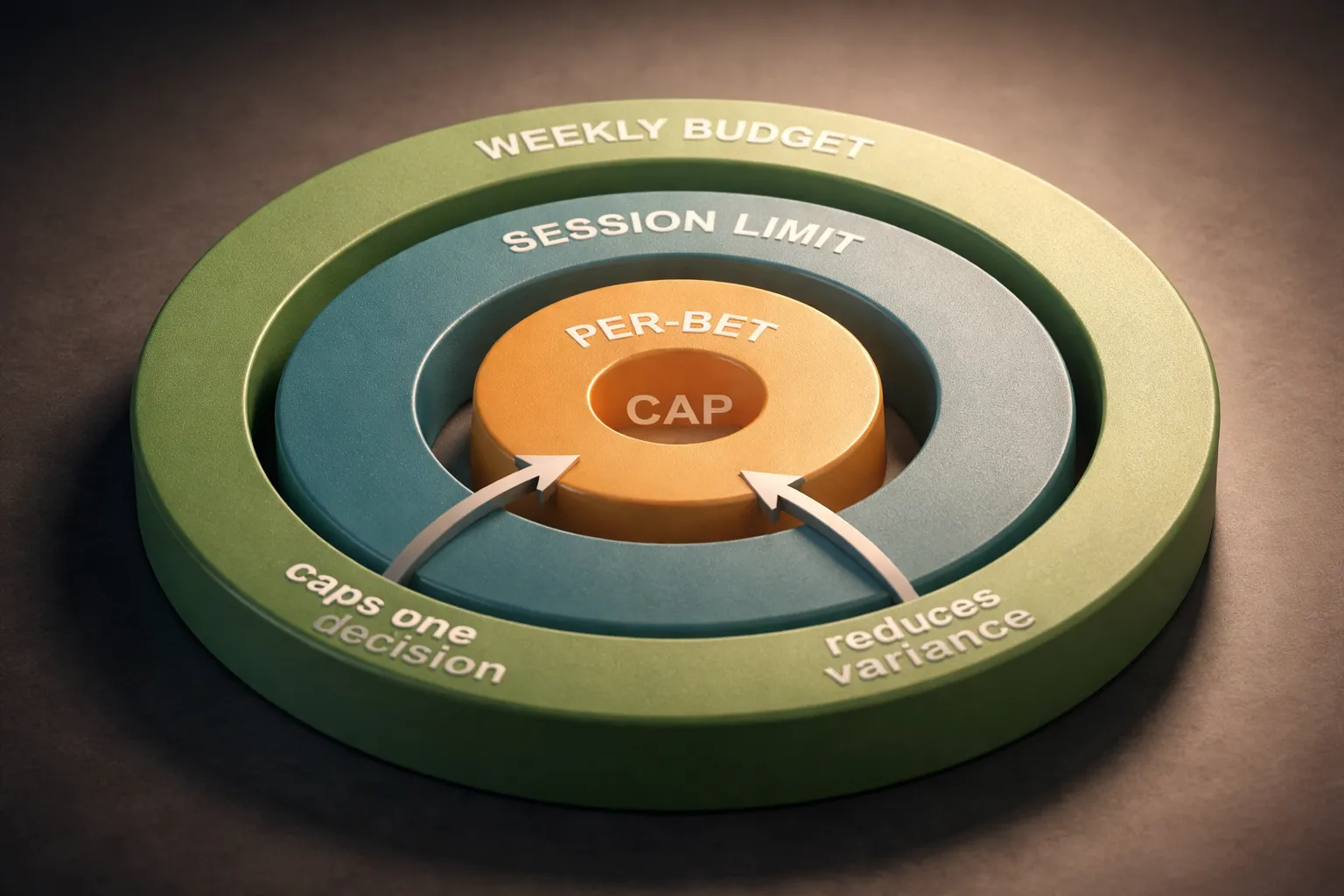
What “Per-Bet Rules” Mean (and Why They’re Non-Negotiable)
Per-bet rules are a preset staking framework that caps risk on any single wager, spin, or hand. Think: “I never bet more than $X” or “I stake 1–2% of my bankroll per play.” It’s simple, but it’s the line that prevents one emotional decision from wrecking your entire plan.
Per-Bet Limits vs. Session and Weekly Budgets
A daily/weekly budget is your total money-at-risk over time. A session limit is what you’ll risk in a single sitting. A per-bet limit is your maximum exposure on each decision.
- Weekly budget answers: “How much can I afford overall?”
- Session limit answers: “How much can I lose tonight before I stop?”
- Per-bet rule answers: “How much can I lose on the next click?”
Without per-bet rules, a “budget” becomes a suggestion you can torch in five minutes.
How Per-Bet Rules Cut Variance and Protect Your Bankroll
Big stakes amplify variance. Small, consistent stakes smooth the swings and extend your runway, giving luck less power over your outcome. Per-bet caps also reduce tilt-driven decisions—similar to how clear boundaries prevent “in the moment” exceptions in Swinging Consent Agreements: Boundaries & Safer Sex.
Common Mistakes That Break the System
- Chasing losses by increasing stake after a bad run.
- “One big bet” recovery to get even fast.
- Raising limits mid-session because “the game feels hot.”
Rules-based discipline shows up everywhere—from saving with Vakantie Vroegboekkorting - Bespaar Meer Geld and Vroegboekkorting voor Studenten: Reizen voor Minder to staying structured in “free” temptations like Camgirls Gratis: Kostenlose Streams Entdecken.
Set Your Universal Per-Bet Cap: The Simple Formula That Works Anywhere
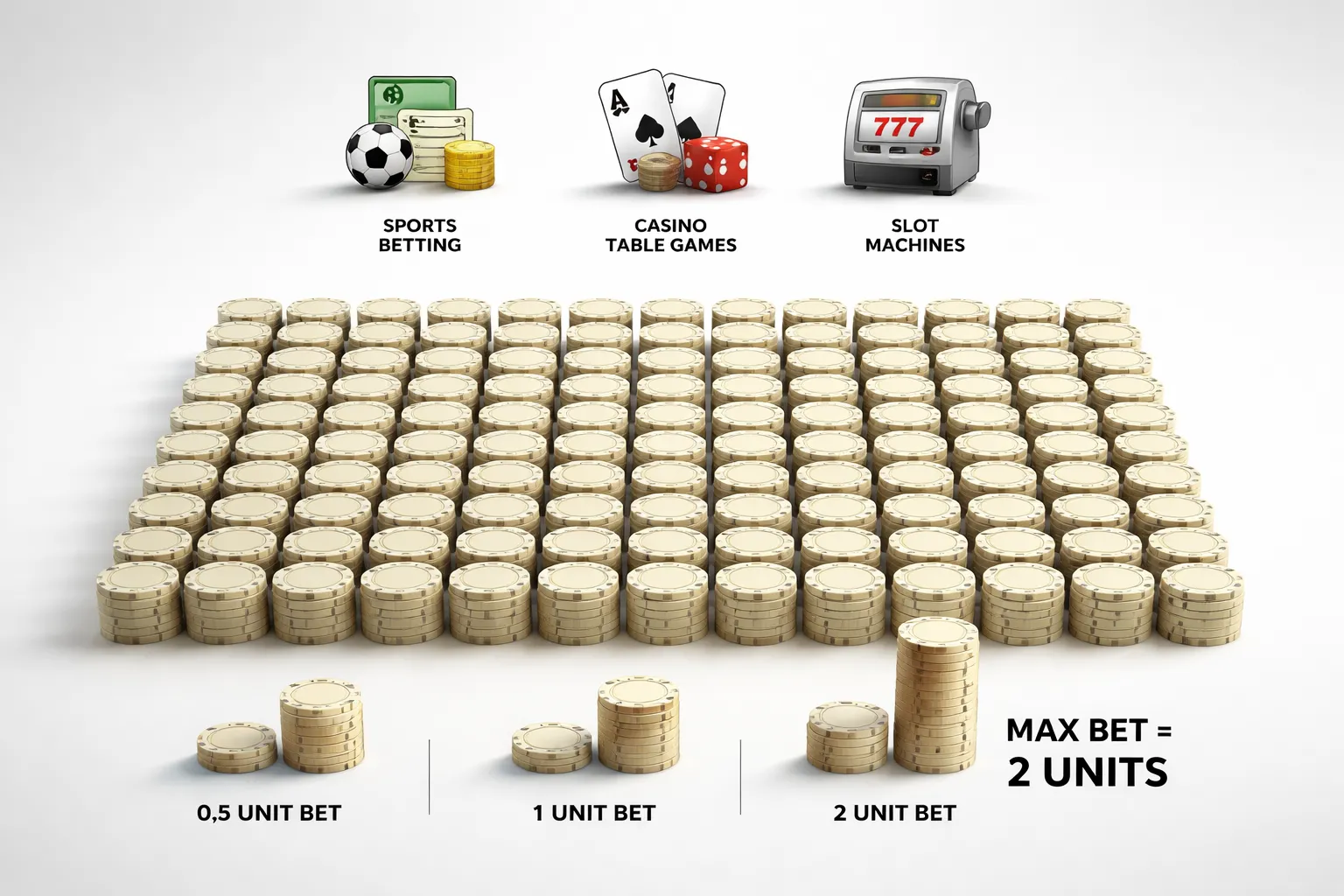
Choose a bankroll unit (so every bet has a ceiling)
Convert your total gambling budget into units. One unit is your “standard bet” that stays consistent across sports, tables, and slots. Formula: 1 unit = bankroll ÷ 100. This gives you 100 units to work with, which keeps losses survivable and decisions repeatable.
Pick a baseline per-bet cap (smaller usually wins)
Set a universal cap as a multiple of your unit:
- Low risk: 0.5–1 unit per bet
- Medium risk: 1 unit per bet
- High risk (still controlled): 1–2 units per bet
Smaller is usually better because variance is relentless. You’re building a system that survives bad runs and blocks “one big bet” recovery thinking. Treat this like any boundaries-first plan (see Swinging Consent Agreements: Boundaries & Safer Sex).
When to use 0.5, 1, or 2 units (and when not to)
- 0.5 unit: high-volatility plays (long-shot props, bonus buys, progressive slots), or when you’re tired/tilted.
- 1 unit: default wager. Most bets should live here.
- 2 units: rare, pre-planned “A-grade” spots only. Never to chase, raise mid-session, or because it “feels hot.”
Hard rules (no exceptions clause)
- Max bet size: 2 units, absolute.
- Max bets per session: 20 (or set a 60–90 minute timer).
- No exceptions: no limit increases after losses, wins, or “free” temptations (related: Camgirls Bare: Ohne Einschränkungen, Camgirls Aufnahmen).
Worked examples (sports, table, slots)
- $100 bankroll: 1 unit=$1. Sports: $1 per bet, max $2. Table: $1–$2 hands. Slots: $0.50–$1 spins.
- $500 bankroll: 1 unit=$5. Sports: $5, max $10. Table: $5–$10. Slots: $2.50–$5.
- $1,000 bankroll: 1 unit=$10. Sports: $10, max $20. Table: $10–$20. Slots: $5–$10.
Keep the cap universal—like locking in a deal early and not “upgrading” later (see Reispakketten met Vroegboekkorting: Boek Voordelig).
Per-Bet Rules for Sports Betting (Straight Bets, Parlays, Props, Live Betting)
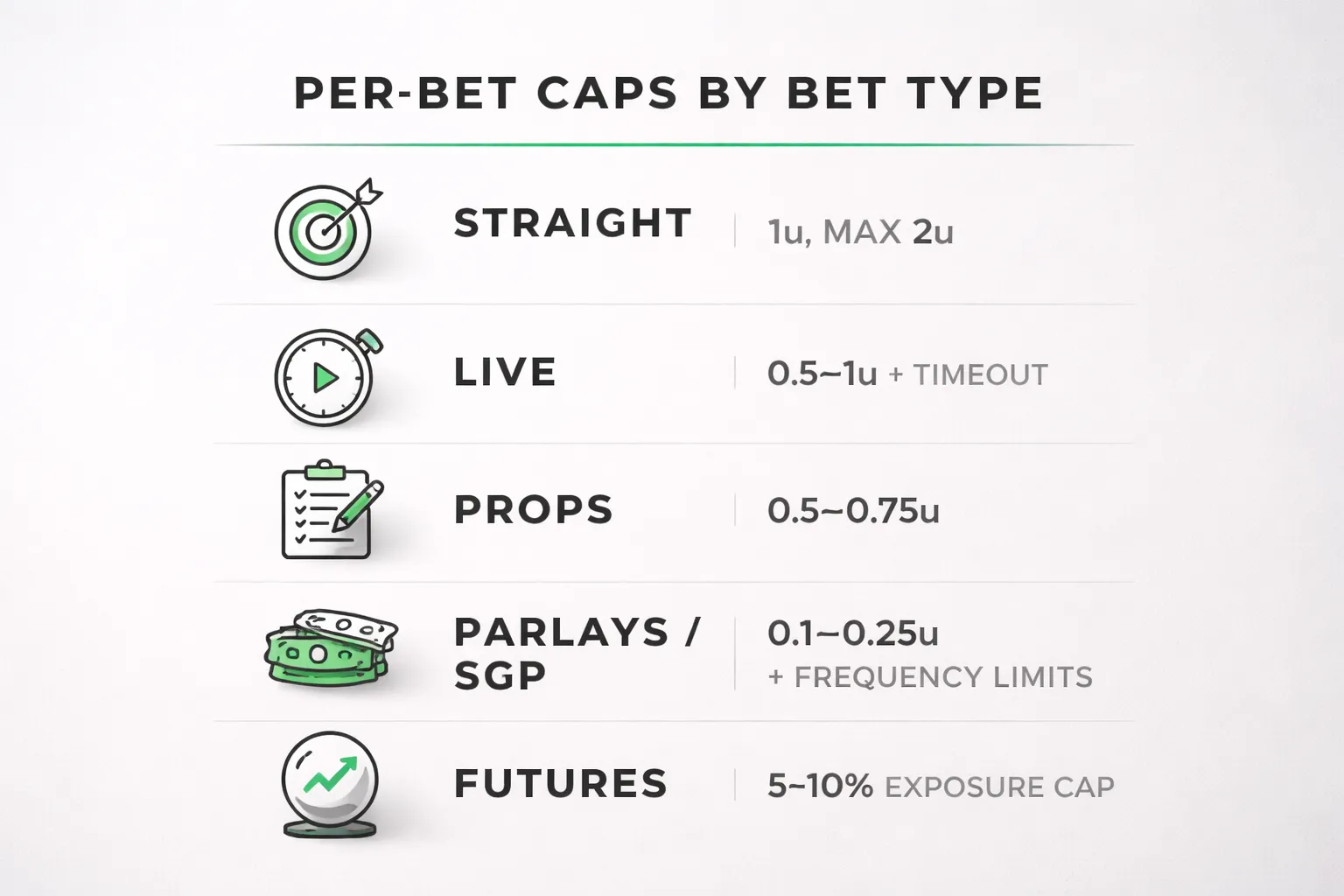
Straight Bets (your default)
Use fixed-unit staking: 1 unit per play, with a hard max of 2 units. It fits most bettors because it controls tilt, smooths variance, and keeps wins from turning into “upgrade” bets. Keep the cap universal—like locking in a deal early and not upgrading later (see Welke Hotels Bieden Vroegboekkorting aan?).
Live Betting (tighter caps + timeouts)
- Max size: 0.5–1 unit per live bet; never exceed your straight-bet max.
- Timeout: after any live bet, wait 3–5 minutes (or until the next break/period) before placing another.
- Chase block: after two straight live losses, stop live betting for the day.
Props (small by design)
- Size: 0.5–0.75 units. Props swing harder—keep them smaller to protect the bankroll.
- Limit: cap props to 20–30% of your daily card.
Parlays + Same-Game Parlays (lottery-ticket rules)
- Micro-stake: 0.1–0.25 units per parlay/SGP.
- Frequency: max 1–2 per day (or 5 per week).
- Framing: entertainment only; no “make it back” parlays.
Futures (bankroll lock-up)
- Exposure limit: max 5–10% of bankroll tied up in futures at any time.
- Per ticket: 0.5–1 unit.
Optional Guardrails (simple, enforceable)
- Max daily loss: 3–5 units, then stop.
- Max active exposure: no more than 10–15 units open at once (all pending bets combined).
- Per market/league: cap any single league to 50% of your weekly stakes. If limits slip, use tools in Privacy, Compliance & Self-Exclusion: What to Know.
Per-Bet Rules for Casino Table Games (Blackjack, Roulette, Baccarat, Poker Rooms)

Per-Bet Rules for Casino Table Games (Blackjack, Roulette, Baccarat, Poker Rooms)
Table games feel “small” per hand, but pace makes them budget killers. Use a unit system and lock in limits before you sit down. For blackjack, roulette, and baccarat, keep each wager tight: 0.5–1 unit per hand/spin. If you’re pressing wins, do it with a rule (example: one-step increases only), not emotion. Avoid “chasing” with doubled bets; it’s how a planned session turns into a blowout.
- Per hand/spin: 0.5–1 unit.
- Session stop-loss: 3–5 units down, then leave.
- Session cap: set a hard ceiling on total buy-in and do not reload.
- Poker rooms: treat each buy-in as a fixed risk; limit rebuys and table-hop only after a break.
Keep it enforceable: one number for the bet, one number for the loss, one rule for walking away. If you find yourself breaking rules, use the tools in our Privacy, Compliance & Self-Exclusion coverage.
Read our detailed guide: Per-Bet Rules for Casino Table Games: Step 3 Budgeting
Per-Spin Rules for Slots (Denomination, Bet Size, Volatility, and Autoplay)

Set a max bet per spin and a max spins-per-session rule
Slots drain budgets fast because volume is the weapon. Set two hard numbers: max bet per spin and max spins per session. Tie both to your session bankroll.
- Denomination: choose the smallest denom that keeps your max bet realistic (avoid jumping denoms mid-session).
- Max bet: cap at ~1% of your session bankroll (0.5% if you tilt easily).
- Max spins: pre-set a spin count (or time box) and stop when it’s hit—win or lose.
Volatility and bankroll drain
Higher volatility means longer dead stretches and bigger swings. The rule is simple: the higher the volatility, the smaller the stake. If a game feels “cold,” don’t raise bets to chase—switch games or end the session.
Autoplay and turbo mode
Autoplay and turbo compress losses into minutes. Best practice: turn both off. If you insist, limit autoplay to a small batch (e.g., 10–25 spins) with a strict stop-loss and no “auto-reload” behavior.
Bonus buys and feature bets
Treat bonus buys as a separate high-risk product. Set a hard cap: 0 bonus buys or max 1 per session, and only if it fits inside your stop-loss (not “on top of it”).
Progressives
Progressives are variance on variance. Keep exposure small, label it entertainment only, and cap sessions tightly. Don’t extend play “because the jackpot is due.”
Rule discipline is the point. If you need a reminder that boundaries work because they’re enforced, see Swinging Social Boundaries: Consent & Community Etiquette.
Make the Rules Stick: Tools, Friction, and Pre-Commitment Systems
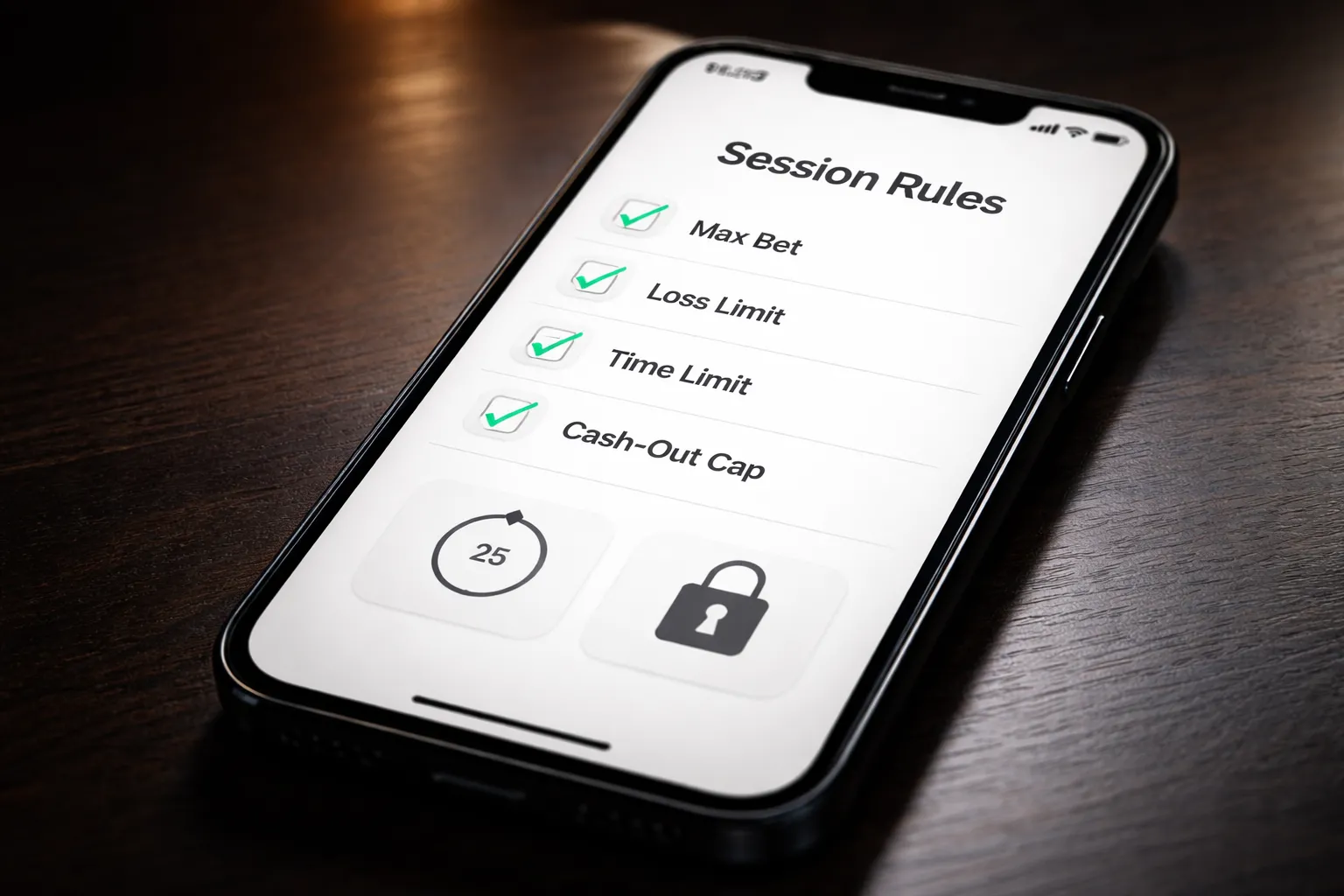
Write Your Rules as a Checklist (Before You Play)
- Session bankroll: $___ (separate from bills, savings, and debt payments).
- Max bet size: $___ per bet/spin/hand.
- Loss limit: stop at -$___ (no “one more to get even”).
- Win cap: cash out at +$___ (don’t give it back).
- Time limit: ___ minutes; set an alarm.
- Game list: only ___ games; no “browse and drift.”
- Exit plan: when a limit hits, you leave. Full stop.
Use Built-In Limits (When Available)
- Deposit limits: cap how much can enter the account.
- Loss limits: cap downside per day/week/month.
- Wager limits: cap stake size and total action.
- Time limits: forced logouts beat “willpower.”
Payment Methods That Add Friction
- Cash: best for discipline. When it’s gone, you’re done.
- Card: worst for impulse. Avoid stored cards and one-click top-ups.
- E-wallet: usable if you disable instant top-ups and keep a hard monthly cap.
Cooling-Off and Self-Exclusion
- Cooling-off: lock yourself out for 24 hours to several weeks when you break rules.
- Self-exclusion: longer blocks when limits don’t hold. Use it early, not after damage.
Accountability: Make It Visible
- Text your limits to a friend/partner before you start.
- Track every session in a notes app or simple spreadsheet.
- Keep your setup “clean” like you would with Camgirls Webcam: Technik und Ausstattung: fewer shortcuts, fewer mistakes.
Key Takeaways
Key Takeaways
- In het kort: Per-bet rules cap risk and stop emotional “chasing” before it starts.
- Use one universal unit (e.g., 1 unit = 1% of your session budget), then add game-specific caps: sports (1–2u straight bets), tables (1u base, fixed max), slots (small spins, hard ceiling).
- Higher variance needs smaller stakes: parlays, bonus buys, and progressives get reduced units or a strict “rare use” rule.
- Pre-commitment makes rules real: set stake limits, loss limits, and time blocks before you log in—no “just this once” exceptions.
- Add friction: disable one-click re-buys, keep only one deposit method, and avoid multitasking so decisions stay deliberate.
- Escalate when you break rules: take an immediate break; if limits don’t hold, use self-exclusion early, not after damage.
- Make it visible: text your limits to someone, track every session, and keep a “clean” setup—fewer shortcuts, fewer mistakes (like you’d do in Camgirls Angebote: Entdecke Deine Möglichkeiten or Camgirl Lifestyle: Hinter den Kulissen).
FAQ
What percentage of my bankroll should a single bet be?
Use a flat stake: 1–2% of your bankroll per bet. Go lower (0.5–1%) for volatile games or if you tilt. Hard cap: never exceed 5% on any single wager, even on “sure things.”
Should I increase my bet size after a win or a loss?
No. Keep it fixed. Chasing losses (martingale) blows budgets fast; pressing wins creates “house money” mistakes. If you must adjust, do it only between sessions, based on a new bankroll total—not emotions.
How do I set per-bet rules if the table minimum is too high?
Walk. Or switch to lower-minimum tables, lower-stakes markets, or free/low-stake formats. If the minimum forces you above 2–5% per bet, it’s incompatible with your budget—like booking late versus using vroegboekkorting.
Are parlays okay if I’m on a strict budget?
Mostly no. Treat parlays as high-variance “entertainment” bets: max 0.25–0.5% of bankroll, pre-set, and never to recover losses. If you’re drawn to risky combos, read Was sind Camgirls? and avoid similar impulsive clicking.
How many spins/bets should I allow per session?
Set a hard count and a timer. Example: 50–100 spins or 10–20 wagers, then stop—win or lose. Count-based caps beat “I’ll quit soon” thinking. Track it like you’d track sessions and triggers in Nudelive.
What should I do if I keep breaking my rules?
Escalate fast: take a 7–30 day break, remove payment shortcuts, and use deposit limits. If you still break rules, self-exclude early and tell someone. Replace gambling time with a planned goal (even incentive reizen planning).
Conclusion
Conclusion
Per-bet rules turn a “budget” into a hard stop. Start with one universal cap you never break, then add format-specific tweaks: lower max bets for fast games, tighter limits for live or bonus-driven play, and a clear “walk away” rule when you hit your ceiling.
Make it frictionless to follow: set limits inside the app (deposit limits, loss limits, time limits) and write your rules down in one place. If it isn’t written, it’s negotiable in the moment.
If you keep breaking rules, don’t “try harder.” Escalate: take a 7–30 day break, remove payment shortcuts, and cut access. If you still breach your limits, self-exclude early and tell someone. Replace gambling time with a planned goal—something you can track and finish (even incentive reizen planning).
- Final tip: Treat every rule break as data: what triggered it, what you told yourself, and what you’ll change next session.
Next: Step 4 is where this becomes sustainable—tracking results, spotting patterns, and reviewing/recalibrating limits so your rules stay realistic and enforceable.
If you want cheaper, controlled alternatives to impulse spending, compare options like Camgirls Günstig: Sparsame Angebote, scan Camgirls Erfahrungen: Ehrliche Rückmeldungen, consider Vroegboekkorting Beschikbaarheid: Wanneer u Moet Boeken, or explore Camgirls Exklusiv: Einzigartige Erlebnisse.
-
Online vs Land-Based Casino Odds: Rules & House Edge
1 month ago -
Casino Betting Systems: Myths, Hot Streaks & “Due” Numbers
1 month ago -
Online vs In-Person Casino Odds: RNGs & Fair Play
1 month ago -
Casino Security, Fairness & Regulation Explained
1 month ago -
Signs of Gambling Addiction: Warning Signs & Help Options
1 month ago
-
- What percentage of my bankroll should a single bet be?
- Should I increase my bet size after a win or a loss?
- How do I set per-bet rules if the table minimum is too high?
- Are parlays okay if I’m on a strict budget?
- How many spins/bets should I allow per session?
- What should I do if I keep breaking my rules?
-
- What percentage of my bankroll should a single bet be?
- Should I increase my bet size after a win or a loss?
- How do I set per-bet rules if the table minimum is too high?
- Are parlays okay if I’m on a strict budget?
- How many spins/bets should I allow per session?
- What should I do if I keep breaking my rules?
-
Signs of Gambling Addiction: Warning Signs & Help Options
1 month ago -
Casino Betting Systems: Myths, Hot Streaks & “Due” Numbers
1 month ago -
Casino Systems Myth: Can You Really Gain an Edge?
1 month ago -
Online vs In-Person Casino Odds: RNGs & Fair Play
1 month ago -
Online vs Land-Based Casino Odds: Rules & House Edge
1 month ago
-
Online vs Land-Based Casino Odds: Rules & House Edge
1 month ago -
Casino Betting Systems: Myths, Hot Streaks & “Due” Numbers
1 month ago -
Online vs In-Person Casino Odds: RNGs & Fair Play
1 month ago -
RTP Explained: How to Use Return to Player to Choose Slots
1 month ago -
Casino Security, Fairness & Regulation Explained
1 month ago