Responsible Gambling Tips: Limits, Tools, and Safer Play

Gambling turns risky when you lose control of time and money. Responsible gambling means you set rules before you play, then you follow them. This guide gives you clear tips to lower harm and keep play safer.
You will learn how to set a budget, cap losses, and lock in time limits. You will learn which tools most sites and apps offer, including deposit limits, loss limits, reality checks, and time-outs. You will also learn when to use self-exclusion and what steps to take if your play stops feeling voluntary.
- Limits: budget, deposit, loss, wager, and session time.
- Tools: alerts, cooling-off periods, account blocks, and spending summaries.
- Safety checks: warning signs and fast routes to support.
What Are Responsible Gambling Tips and Limits?
Definition: safer habits and pre-committed limits
Responsible gambling tips are actions you take before you play and while you play to keep gambling under control.
The core rule is simple. You set limits in advance. You follow them even when you feel confident or frustrated.
Limits turn gambling into a planned expense and a timed activity, not an open-ended chase. For a step-by-step plan, see How to Set a Gambling Budget (and Stick to It).
Why limits work
Limits reduce impulsive decisions. They remove bargaining with yourself in the moment.
They also cut off chasing losses. Chasing happens when you raise stakes or extend sessions to recover money. A loss limit or time limit stops that pattern fast.
Tools like reality checks and spending summaries help because they force a pause. You see time and money totals in plain numbers. That makes it easier to stick to your plan.
Common limit types
- Budget limit: Your total gambling money for a week or month. Treat it like entertainment spending.
- Deposit limit: Caps how much you can add to your account in a set period.
- Loss limit: Stops play after you lose a set amount. This is one of the strongest anti-chasing controls.
- Wager or stake limit: Caps bet size per spin, hand, or round.
- Session time limit: Ends your session after a set number of minutes or hours.
- Frequency limit: Limits how many days per week you gamble or how many logins you allow.
- Game choice limit: Pre-selects what you will play, and what you will avoid. Avoid high-speed games if you tend to lose track of time.
Myths to avoid
- “I can win it back.” This leads to bigger bets and longer sessions. Use a loss limit and stop when it hits.
- “I am due.” Random outcomes do not balance out on your schedule. Past results do not create a future win.
- “A system guarantees profit.” No betting system removes house edge or variance. Systems can increase risk by pushing higher stakes.
- “I will stop after one more.” If you rely on willpower, you will slip. Use time-outs, reality checks, and hard limits instead.
If your play stops feeling voluntary, use stronger tools. Review Self-Exclusion Programs Explained. If you notice warning signs like secrecy, mood swings, or spending beyond your plan, read Signs of Gambling Addiction: Warning Signs and Where to Get Help.
Set Personal Limits Before You Play (Money, Time, Frequency)
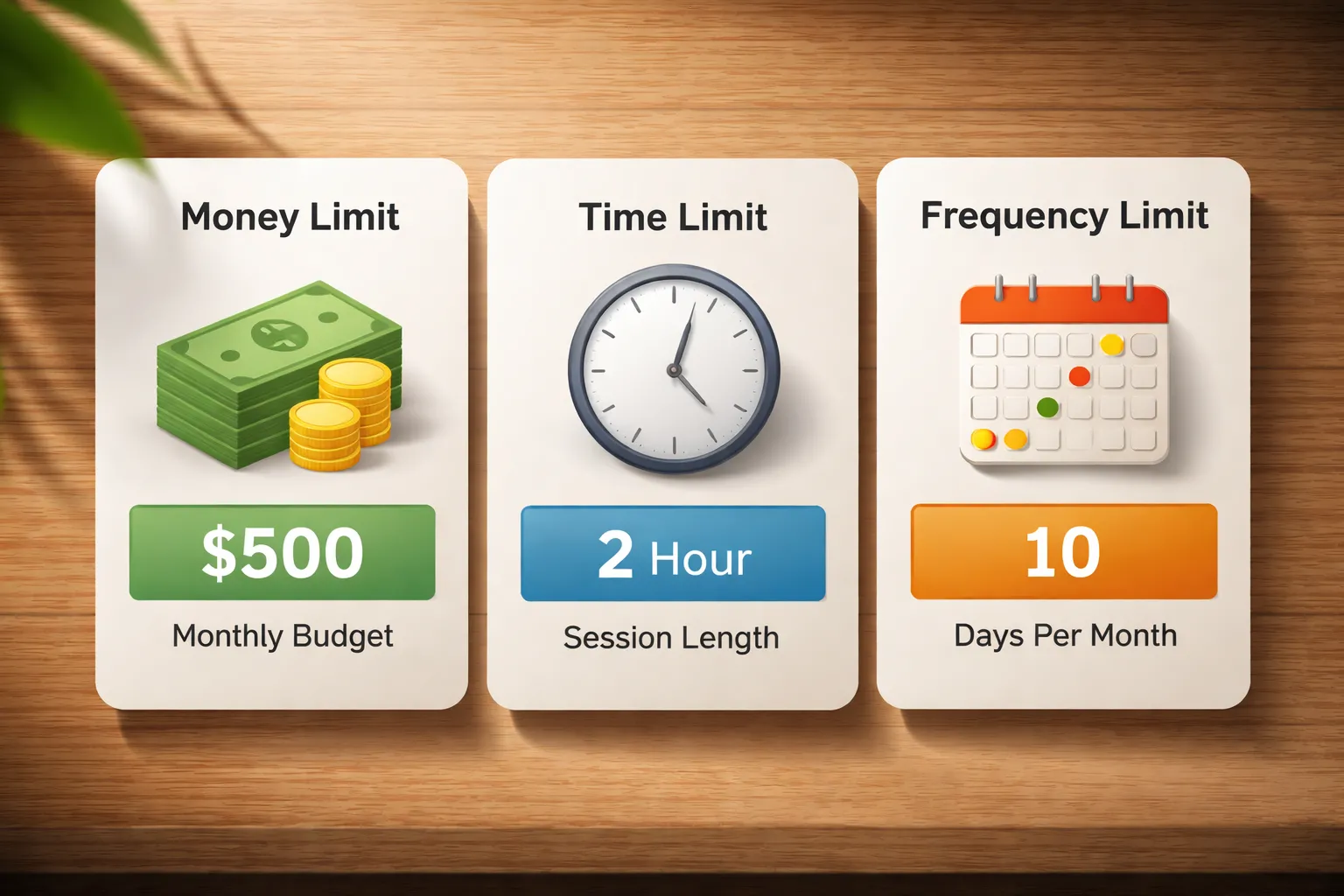
Budgeting Rules First
Set limits before you open an app or step onto a casino floor. Decide your numbers while you feel calm. Write them down.
- Use disposable income only. Your gambling money comes after rent or mortgage, food, transport, debt payments, and savings.
- Separate bankroll from bills. Keep gambling funds in a different account or prepaid card. Do not mix it with bill money.
- Plan for zero. Your budget must assume you can lose 100 percent of the bankroll.
- Set a cash exit rule. If you play in person, bring only your bankroll. Leave cards at home. For more on this approach, see Visiting a Casino on a Budget: Parking, Drinks, and Smart Money-Savers.
If you need a full budgeting walkthrough, use How to Set a Gambling Budget (and Stick to It).
Money Limits You Should Set
Use tools that block extra spending. Pick limits that force a stop.
- Deposit limits. Cap how much you can add per day, week, and month. Set it at the lowest level you can accept.
- Loss limits. Cap how much you can lose in a day or week. When you hit it, you stop. No top-ups.
- Wagering or stake limits. Cap bet size per spin, hand, or wager. This slows losses and reduces swings.
- Spend cap across sites. If you use more than one operator, your real limit is the total across all accounts. Track it in one place.
Do not raise limits in the moment. If you change a limit, do it after a cooling-off period and only downward.
Time Limits (Session Length and Curfews)
Time is a cost. Long sessions push you into bad choices.
- Session length. Set a hard stop like 30, 45, or 60 minutes. Use a phone alarm. Stop when it rings.
- Play curfews. Block late-night play. Fatigue increases impulsive decisions.
- Schedule non-gambling days. Put them on your calendar first. Treat them as fixed.
- Reality checks. Turn on pop-ups that show time and spend. Do not dismiss them on autopilot.
Frequency Limits (How Often You Play)
Control how many times gambling shows up in your life. Frequency creep happens fast.
- Days per month. Pick a maximum, then stick to it.
- Sessions per week. Set a hard number. One session can turn into many if you do not define it.
- One session per day. If you play, you play once. No return visits.
Lower-Risk Gambling Guidelines (Quick Overview)
These numbers give you a simple ceiling. They are not a guarantee of safety. They help you avoid common high-risk patterns.
- Money: keep gambling spend at or below 1 percent of your household income.
- Time: gamble on 4 days per month or less.
- Variety: stick to 2 game types at most. More variety often means more chasing and more time.
Practical Examples: Turn Income Into Limits
Start with household income, then set a fixed cap. Use gross or net, but stay consistent. Many people find net income easier for budgeting.
| Monthly household income | 1% monthly gambling cap | Weekly cap (1% per month divided by 4) |
|---|---|---|
| $3,000 | $30 | $7.50 |
| $5,000 | $50 | $12.50 |
| $8,000 | $80 | $20 |
Then convert that cap into rules you can follow. Example: $50 per month, two sessions, $25 per session, 60 minutes max, $2 stake cap. If you hit your loss limit or time limit, you stop.
If you struggle to stop when you reach limits, use stronger blocks. Review Self-Exclusion Programs Explained: How They Work and What to Expect. If you see warning signs like secrecy or chasing, read Signs of Gambling Addiction: Warning Signs and Where to Get Help.
Use Built-In Safer Gambling Tools (Online & In-Person)

Account and Payment Controls
Use the controls inside your gambling account first. They work fast and they remove decision points.
- Deposit caps: Set a daily, weekly, or monthly maximum. Treat it as your hard ceiling. Some sites apply increases after a waiting period, but cuts usually apply right away.
- Loss limits: Stop play when you hit a net loss amount. This helps when you keep redepositing to chase.
- Wager limits: Cap total stakes over a period. This controls high volume betting even when stakes look small.
- Session time limits: Set a maximum session length. Pair it with a forced log out if the site offers it.
- Cooling-off periods: Lock your account for a short break, often 24 hours to a few weeks. Use this after a bad session.
- Reality checks: Turn on pop ups that show time played and net results. Set them for 15 to 30 minutes so you see the drift early.
Time-Out vs. Cooling-Off vs. Self-Exclusion
| Tool | Best for | Typical length | What it blocks |
|---|---|---|---|
| Time-out | Stopping a session fast | Hours to days | Login and betting on that account |
| Cooling-off | Breaking a pattern for a set period | Days to weeks | Login, betting, and often marketing messages on that site |
| Self-exclusion | Strongest block when you cannot stop | Months to years, sometimes permanent | Account access across a site, brand group, or licensed network, plus removal from promos |
Self-Exclusion: What It Is and What It Does and Doesn’t Block
Self-exclusion is a formal lock. You choose a duration and the operator must block your access during that period.
- What it does: Blocks login and play, blocks deposits and withdrawals through the gambling account, stops most marketing.
- What it may not do: It may not block unlicensed sites, new accounts at unrelated operators, private cash games, or gambling through other people.
- How long it lasts: Common terms run from 6 months to 5 years. Some programs offer permanent exclusion. Many do not allow early removal.
If limits do not hold, use self-exclusion. See Self-Exclusion Programs Explained: How They Work and What to Expect. If you notice chasing, secrecy, or using gambling to cope, read Signs of Gambling Addiction: Warning Signs and Where to Get Help.
Activity Statements: Track Spend, Net Results, and Time Played
Most regulated sites provide activity statements. Use them like a bank statement.
- Net results: Check wins minus losses over 7 and 30 days. Ignore single big wins. Track the trend.
- Total deposits: Watch for rising deposits even if your net looks flat.
- Time played: Look for longer sessions and more frequent logins. Time creep is a common early warning sign.
- Game and bet history: Spot patterns like late night play, higher stakes after losses, or switching to faster games.
Blocking and Device Tools
Account limits help. Device blocks reduce workarounds.
- Gambling site and app blockers: Install a blocker on your phone and computer. Set a password you do not control, or store it with someone you trust.
- DNS and router controls: Use DNS filtering or router level blocks to cover every device on your network.
- App restrictions: Use built-in screen time tools to block gambling apps and web access during high risk hours.
Financial Safeguards
Put friction between you and fast money. Fast deposits drive fast losses.
- Spending alerts: Turn on bank alerts for card purchases, low balances, and weekly spend totals. Review them the same day.
- Merchant blocks: Ask your bank to block gambling merchant codes if available. This can stop card deposits at many operators.
- Separate accounts: Use one card for entertainment only. Keep bills on a different account. Do not link overdrafts to your gambling spend.
- Remove saved payment methods: Delete stored cards and e-wallets from gambling accounts. Disable one click deposits.
- Cash planning for in-person play: Bring a fixed amount in cash and leave cards at home. Pair this with your session limits. For practical trip costs, see Visiting a Casino on a Budget.
Mindful Play: Manage Triggers, Emotions, and Risky Behaviors
Recognize emotional triggers
Your mood changes your risk tolerance. Track the patterns that push you to bet more, bet faster, or break limits.
- Stress: You look for relief. You ignore odds and chase quick wins.
- Boredom: You play for stimulation. You extend sessions and add side bets.
- Loneliness: You use gambling for company. You keep playing to avoid stopping.
- Celebration: You feel “up” and increase stakes. You treat wins as free money.
- Alcohol or drugs: You lose inhibition and time awareness. You deposit more and accept worse decisions.
Set a simple rule. If you feel any trigger, pause deposits and switch to a low effort activity for 10 minutes. If you still want to gamble, follow your pre set limits from How to Set a Gambling Budget (and Stick to It).
Avoid chasing losses
Chasing losses means raising stakes, extending time, or adding deposits to win back money you already lost. It turns a planned session into open ended spending.
- Common signs: “One more bet,” bigger wagers, switching games, withdrawing savings, reloading after a loss streak.
- Fast interrupts: Stop play. Stand up. Close the app. Move your phone away. Set a 30 minute lockout timer.
- Hard stop rule: If you hit your loss limit, end the session. No exceptions. No “recovery” bets.
If chasing feels frequent, use stronger barriers like time outs or self exclusion. See Self-Exclusion Programs Explained: How They Work and What to Expect.
Know the odds: house edge, variance, and near misses
You do not control the math. You control exposure.
- House edge: The built in cost of play. Over time, expected loss grows with total amount wagered.
- Variance: Short term swings. You can win early, then lose later. A hot streak does not change future odds.
- Near misses: Results that look close to a win. They feel persuasive, but they do not increase your next chance.
Safer game choices
Speed drives spend. The faster the betting cycle, the easier it is to lose track of money and time.
- Avoid rapid games: Fast slots, turbo modes, quick roulette, instant win games. They compress many bets into minutes.
- Limit game switching: Switching often signals chasing. Pick one game type per session.
- Limit side bets and add ons: They increase total wagered and raise volatility.
- Control autoplay: Turn it off. Manual betting forces a pause between decisions.
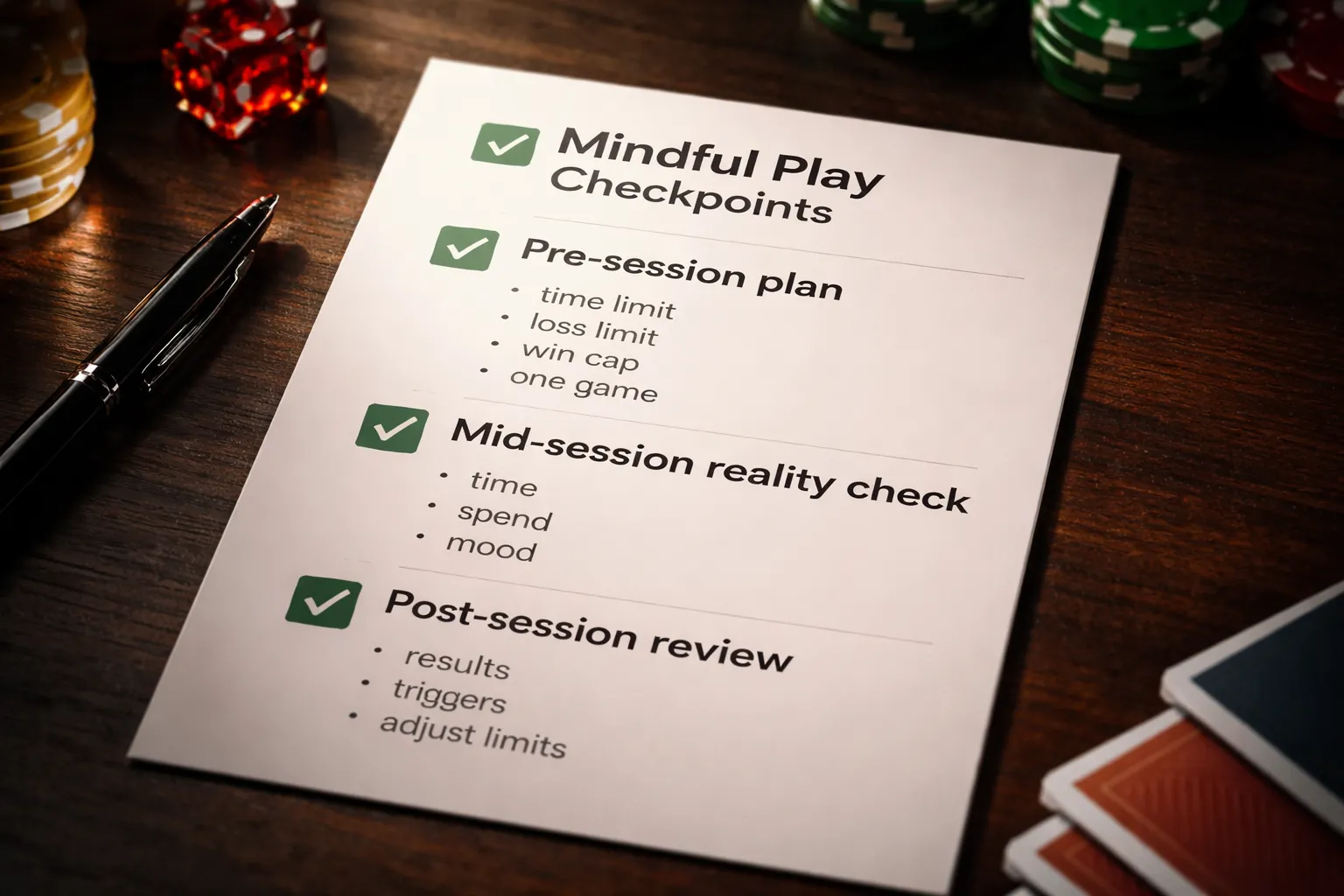
Decision checkpoints
Use checkpoints to keep play aligned with your plan, not your mood.
- Pre session plan: Set a time limit, a loss limit, and a win cap. Decide your one game type. Decide your stop signal.
- Mid session reality check: Review time spent, money spent, and mood. If you feel stressed, bored, or numb, stop.
- Post session review: Log deposits, withdrawals, total loss or win, and triggers. Adjust limits for next time.
If you keep breaking rules or hiding spend, treat it as a warning sign. Use Signs of Gambling Addiction: Warning Signs and Where to Get Help.
Warning Signs You Need Stronger Limits (and What to Do Next)
Financial warning signs
Money is the clearest signal. If your gambling starts changing how you pay for basics, your limits are too weak.
- You borrow to gamble. Loans from friends, family, payday lenders, or apps. Any borrowing to fund play counts.
- You pay bills late. Rent, utilities, credit cards, or child support slip because gambling takes priority.
- You hide statements. You switch to paperless, delete emails, or intercept mail to avoid questions.
- You use credit to gamble. Credit cards, cash advances, overdrafts, or buy now pay later. This turns losses into long term debt.
- You chase with bigger deposits. You add funds after a loss to get back to even.
Behavioral warning signs
Behavior changes show up before the balance hits zero. Track what you do, not what you plan to do.
- Your stakes rise over time. You need higher bets to feel the same impact.
- Your sessions run longer. You keep extending play and ignore your stop signal.
- You break your limits. You increase caps mid session, override tools, or open new accounts to keep going.
- You get secretive. You hide play time, lie about losses, or gamble when you said you would not.
- You gamble at risky times. Late night sessions, during work hours, or when you should be sleeping.
Emotional warning signs
Mood is a trigger. If gambling starts managing your feelings, tighten your controls.
- You feel irritable when you cannot play. You get restless, short tempered, or distracted.
- You feel guilt after sessions. You regret play, then repeat it.
- You feel anxious about money. You check balances, avoid accounts, or dread bills.
- You gamble to escape. You use betting to numb stress, sadness, boredom, or loneliness.
- You feel numb while playing. You play on autopilot and lose track of time and spend.
What to do next, today
Act fast. Small delays lead to bigger losses.
- Pause play. Log out. Close apps. Leave the venue. No more bets today.
- Reduce access to funds. Remove saved cards, lower daily bank transfer limits, and keep gambling money in a separate account with no overdraft.
- Strengthen your limits. Cut deposit limits, loss limits, and session time limits by at least 25 to 50 percent. Set them for the longest lock period offered.
- Use time outs. Take a 24 hour to 30 day break. Longer is better if you keep returning.
- Consider self exclusion. Use formal blocks when you keep overriding your own rules. See Self-Exclusion Programs Explained: How They Work and What to Expect.
Talk to someone and document the impact
Secrecy keeps the cycle going. One clear conversation helps you reset.
- Tell one person you trust. Share your limits, your risks, and what support you need, like holding cards or checking in after sessions.
- Write down the facts. List dates, amounts, time spent, and what you skipped to gamble. Include mood and triggers.
- Set a simple rule. No gambling when stressed, tired, angry, or after alcohol or drugs.
- Get help if signs persist. Use Signs of Gambling Addiction: Warning Signs and Where to Get Help if you keep breaking limits, borrowing, or hiding losses.
Get Help: Support Options If Gambling Stops Being Fun
If gambling stops feeling like entertainment, act fast. Do not wait for a bigger loss to “prove” it is a problem. Start with one step you can do today. Tell a person you trust what is happening. Move money access out of reach, then lock in barriers that you cannot override in a weak moment. Use site and app tools, then escalate to formal self-exclusion if you keep breaking rules. If you see warning signs like hiding play, chasing losses, or borrowing, treat that as a stop signal, not a debate. Support works best when it is specific. Dates, amounts, triggers, and a clear plan for the next 24 hours.
- Talk to someone: friend, partner, family member.
- Use operator tools: deposit limits, loss limits, time-outs.
- Block access: device and payment blocks, bank controls.
- Self-exclude: longer, stronger limits you cannot undo.
- Get professional support: counseling, support groups, helplines.
- Track warning signs: see Signs of Gambling Addiction: Warning Signs and Where to Get Help.
- Learn how self-exclusion works: Self-Exclusion Programs Explained: How They Work and What to Expect.
Read our detailed guide: Get Help: Support Options If Gambling Stops Being Fun - Responsible Gambling Tips: Limits, Tools, and Safer Play
- In het kort: Set money and time limits before you play.
- In het kort: Use deposit, loss, wager, and session limits in your account.
- In het kort: Treat bonuses as entertainment, not income.
- In het kort: Stop if you chase losses, hide play, or feel loss of control.
- In het kort: Use reality checks, time-outs, and self-exclusion when limits fail.
- In het kort: Get support early and follow a written plan.
Responsible gambling checklist
- Set a bankroll. Use money you can afford to lose. Keep it separate from rent, bills, debt payments, and savings.
- Set a hard loss limit. Pick a number. Stop when you hit it. Do not reload to continue.
- Set a time limit. Decide your session length. Use a timer. Leave when time is up.
- Set a deposit limit. Daily, weekly, or monthly. Lock it in before you start playing.
- Set a stake limit. Cap your bet size per spin, hand, or round. Avoid raising stakes to win back losses.
- Plan cash outs. Set a win goal. Withdraw when you reach it. Do not roll winnings back into higher-risk play.
- Track every session. Log date, game, time, deposits, losses, and withdrawals. Use your bank app and account history.
- Know the product. Fast games and auto-play raise spend speed. Turn off auto-play and turbo modes where possible.
- Use reality checks. Enable pop-ups that show time and spend. Review them. Act on them.
- Use cooling-off tools. Take a time-out after a bad session. Block access during high-risk hours.
- Avoid high-risk triggers. Do not play when you feel angry, stressed, bored, or after drinking.
- Stop chasing. Chasing losses is a key risk pattern. If it happens, end the session and review your limits.
- Watch warning signs. Hiding play, borrowing, selling items, or missing work are red flags. Read Signs of Gambling Addiction: Warning Signs and Where to Get Help.
- Use self-exclusion if needed. If you cannot stick to limits, block access. Read Self-Exclusion Programs Explained: How They Work and What to Expect.
- Use a written budget. Build a simple plan and stick to it. See How to Set a Gambling Budget (and Stick to It).
Limits and tools checklist
| Tool | What you set | When to use it |
|---|---|---|
| Deposit limit | Max you can add to your account per day, week, or month | Before you deposit, use it as your main guardrail |
| Loss limit | Max you can lose in a period | If you tend to chase after a losing streak |
| Wager limit | Max you can bet in total over a period | If you play high-volume games with many small bets |
| Session time limit | Max minutes per session | If you lose track of time while playing |
| Reality check | Reminder interval that shows time and spend | If you ignore your budget mid-session |
| Cooling-off, time-out | Short break from gambling access | After a bad session, or when urges rise |
| Self-exclusion | Full block for a set period | If you cannot stop or you keep breaking limits |
Rule to follow: If you change limits to keep playing, you already crossed your line. Stop. Use a time-out. If that fails, use self-exclusion and get support.
FAQ
What is responsible gambling?
It means you plan your spending and time, then you stop on schedule. You treat gambling as paid entertainment. You do not chase losses. You use tools like limits, time-outs, and self-exclusion when control slips.
Which limits should I set first?
Set a deposit limit and a time limit. Add a loss limit if your site offers it. Set limits before you play, never mid-session. For a step-by-step setup, see How to Set a Gambling Budget (and Stick to It).
How do I pick a realistic budget?
Use money you can lose without affecting bills, debt payments, food, or rent. Start small. Track your total spend per week, not per bet. If you borrow, sell items, or use credit to play, your budget is already unsafe.
What is the best rule for stopping?
If you change limits to keep playing, you already crossed your line. Stop. Use a time-out. If that fails, use self-exclusion and get support.
What is a cooling-off or time-out?
It blocks access for a short period, often 24 hours to weeks. Use it after a bad session, when you feel stressed, or when urges spike. It helps you break the loop and reset your plan.
What is self-exclusion?
Self-exclusion blocks your access for a set time, often months or years. Use it if you keep breaking limits or you cannot stop. Learn the process in Self-Exclusion Programs Explained.
What are signs my gambling is getting risky?
You chase losses. You hide play from others. You gamble when angry, stressed, or numb. You raise limits or reload to keep going. You use credit or borrow. For a full checklist, read Signs of Gambling Addiction.
Do “loss limits” guarantee I will not overspend?
No. Some products cannot track losses in real time. Bonus wagering can also distort spend tracking. Treat loss limits as a backstop, not a plan. Your main control is a hard budget and a hard stop time.
What should I do after a bad session?
Stop play. Do not chase. Log your net spend and time. Take a time-out for at least 24 hours. Remove saved payment methods if you can. If you repeat the pattern, self-exclude and tell someone you trust.
How can I avoid overspending at a casino?
Bring cash only. Leave cards at home. Set a fixed exit time and an exit amount. Do not use the ATM. Skip alcohol if it lowers your control. For practical tips, see Visiting a Casino on a Budget.
Conclusion: Build a Safer Gambling Plan You Can Stick To
Conclusion: Build a Safer Gambling Plan You Can Stick To
A safer gambling plan is simple. You set limits before you play, you use the tools that enforce them, and you stop when you hit them.
- Set two hard limits. One money limit and one time limit. Treat both as non-negotiable. Use a budget you can afford to lose, see How to Set a Gambling Budget (and Stick to It).
- Lock in friction. Remove saved cards. Lower deposit limits. Turn off one-click deposits. Use time-outs when you feel rushed or angry.
- Track one number. Your net result for the week. If you avoid the total, you lose control faster.
- Protect your exit. Plan your stop point before you start. Leave the app, leave the venue, or hand your cash to a trusted person.
- Escalate early. If you break limits more than once, self-exclude. Learn the process at Self-Exclusion Programs Explained.
- Get support fast. If gambling starts to affect sleep, work, relationships, or bills, talk to someone and use help resources. Use Signs of Gambling Addiction to check the warning signs.
Your final step is to write your plan in one sentence and follow it every session. Example, “I deposit $50 max, play 60 minutes max, and stop when either limit hits.”
-
- What is responsible gambling?
- Which limits should I set first?
- How do I pick a realistic budget?
- What is the best rule for stopping?
- What is a cooling-off or time-out?
- What is self-exclusion?
- What are signs my gambling is getting risky?
- Do “loss limits” guarantee I will not overspend?
- What should I do after a bad session?
- How can I avoid overspending at a casino?
-
- What is responsible gambling?
- Which limits should I set first?
- How do I pick a realistic budget?
- What is the best rule for stopping?
- What is a cooling-off or time-out?
- What is self-exclusion?
- What are signs my gambling is getting risky?
- Do “loss limits” guarantee I will not overspend?
- What should I do after a bad session?
- How can I avoid overspending at a casino?
-
Fairness in Casino Games: RNGs, Odds, House Edge, and Return-to-Player (RTP) - Security, Fairness, and Regulation: How Casinos Keep Games Legit - What Is a Casino and How Does It Work? A Beginner’s Guide
1 week ago -
Regulation and Licensing: Who Oversees Casinos and What Rules They Must Follow - Security, Fairness, and Regulation: How Casinos Keep Games Legit - What Is a Casino and How Does It Work? A Beginner’s Guide
1 week ago -
Security, Fairness, and Regulation: How Casinos Keep Games Legit - What Is a Casino and How Does It Work? A Beginner’s Guide
1 week ago -
What Is a Casino and How Does It Work? A Beginner’s Guide
1 week ago -
How Casinos Make Money: House Edge, RTP, and the Math Behind It
1 week ago
-
Security, Fairness, and Regulation: How Casinos Keep Games Legit - What Is a Casino and How Does It Work? A Beginner’s Guide
1 week ago -
RTP Explained: How to Use Return to Player to Choose Slots
1 week ago -
What Is a Casino and How Does It Work? A Beginner’s Guide
1 week ago -
Casino RNG Explained: How Random Number Generators Work
1 week ago -
How to Set a Gambling Budget (and Stick to It)
1 week ago